

An effective HVAC maintenance plan isn’t just a checklist. It’s the structured document that transforms one-off repair calls into predictable, recurring revenue for your business. Think of it as both a game plan for your technicians and a binding agreement with your client, creating clarity and consistency for everyone involved.
Building Your Foundational HVAC Maintenance Plan Template

This is where you move beyond generic checklists and start building a truly professional service agreement. Your foundational template is the bedrock of your maintenance program. It has to deliver undeniable value to homeowners while protecting your business. It needs to be comprehensive, clear, and legally sound.
The goal isn’t just to list a bunch of tasks. You’re creating a document that builds trust and clearly communicates the real benefits of proactive care. Every single element, from the task descriptions to the terms and conditions, should be crafted with both the customer’s peace of mind and your own operational efficiency in mind.
Defining the Core Service Offerings
The heart of your template is the detailed scope of work. Vague promises like “system check-up” are meaningless and won’t convince a homeowner to sign up. You need specific, actionable tasks broken down by season and system type. This is how you demonstrate real thoroughness.
Start by creating separate, detailed checklists for your primary services:
- Spring/Summer AC Tune-Up: This is all about getting the cooling system ready for the heavy lifting of summer. Key tasks include cleaning the outdoor condenser coils, checking refrigerant levels, testing capacitors, and clearing condensate drain lines to prevent nasty water damage.
- Fall/Winter Heating Tune-Up: Here, the focus shifts to making sure the heating system is safe and ready for cold weather. Essential steps involve inspecting the heat exchanger for cracks (a critical safety check), cleaning burners, testing safety controls, and making sure the ignition sequence is working perfectly.
- Heat Pump Maintenance: Since these units run all year, they need attention twice. These checklists are a hybrid, combining elements from both AC and heating tune-ups, but with special focus on the reversing valve and defrost cycle operation.
When you write these tasks down, use language your customers will actually understand. Instead of writing “verify refrigerant charge,” try something like “Ensure proper refrigerant levels to maximize efficiency and prevent system strain.” That simple shift from what you’re doing to why it matters is key to justifying the plan’s value.
Crafting Ironclad Terms and Conditions
While the service checklist sells the plan, the terms and conditions protect your business. This section can’t be ambiguous; it has to be crystal clear to prevent misunderstandings and disputes down the road. This is what turns your template from a simple list into a professional, binding contract.
Your terms should clearly spell out:
- Scope of Work and Exclusions: Be explicit about what’s included (e.g., two precision tune-ups per year) and, just as importantly, what is not. Common exclusions are the cost of parts, refrigerant, or any repairs discovered during the maintenance visit.
- Liability Limitations: You need language that limits your liability for pre-existing conditions or problems that have nothing to do with the maintenance you performed.
- Payment and Billing Terms: Specify exactly how and when the customer gets billed. Is it an annual upfront payment? Recurring monthly charges? Spell it out.
- Cancellation Policy: Define the process for either you or the customer to terminate the agreement. Can they cancel anytime? Is there a fee? What happens to any pre-paid amounts?
- Service Hours: Clarify that maintenance visits are scheduled during regular business hours. This helps manage expectations around emergency or after-hours calls.
Key Takeaway: Your terms and conditions aren’t just legal fluff; they are essential for managing customer expectations. A clearly defined ‘Exclusions’ clause is often the most important part of the agreement, preventing costly arguments over what is and isn’t covered by the plan.
Assembling the Complete Template
With the core components ready, you can pull it all together into a single, professional document. This is your chance to create a branded template that reinforces your company’s commitment to quality and professionalism.
A solid, professional template is more than just a list of tasks. It’s a comprehensive document that builds trust and protects your business. Here are the non-negotiable elements every template needs to include to be effective.
Core Components of a Professional HVAC Maintenance Template
| Component | Key Details to Include | Why It’s Important |
|---|---|---|
| Company & Client Info | Your logo, business info, client name, address, and equipment details. | Establishes a professional record and personalizes the agreement for each client. |
| Plan Details & Tier | Plan name (e.g., “Priority Comfort Plan”), term length, start/end dates. | Clearly defines the specific agreement the customer is purchasing. |
| Detailed Service Checklist | Separate checklists for heating and cooling visits with benefit-focused descriptions. | Shows the customer the tangible value and thoroughness of your service. |
| Member Benefits | List perks like priority service, repair discounts, or waived diagnostic fees. | These benefits are powerful selling points that justify the cost of the plan. |
| Terms & Conditions | Cancellation policy, liability, payment terms, and scope of work exclusions. | Protects your business legally and sets clear expectations to avoid disputes. |
| Signatures & Date | Lines for both your representative and the customer to sign and date. | Makes the agreement official and legally binding for both parties involved. |
Putting these pieces together creates a document that not only outlines your services but also acts as a powerful sales and retention tool for your business.
The HVAC service industry is on a massive growth trajectory. Industry reports show the market is projected to expand from around USD 78.5 billion in 2023 to potentially over USD 155 billion by the early 2030s. With repairs making up over 41% of revenue, a solid maintenance plan is your best tool for capturing a share of this expanding market. Converting a repair visit into a maintenance plan member is a perfect example of turning a one-time transaction into a long-term business lead.
How to Price Your HVAC Service Agreements for Profit
Nailing down the price for your HVAC service agreements is probably the trickiest part of the whole process. Go too high, and you’ll hear crickets. Go too low, and you’re just giving away your time and killing your margins. The goal is to find that perfect sweet spot where customers see incredible value and your business builds a predictable, profitable revenue stream.
This isn’t about plucking a number out of thin air. Smart pricing comes from knowing your numbers inside and out—your costs, your market, and the real value you’re delivering. Get it right, and your maintenance plan becomes an easy “yes” for homeowners.
Calculating Your True Costs
Before you can even think about a price, you have to know exactly what it costs you to walk through that customer’s door. A ton of contractors make the mistake of just looking at a tech’s hourly rate and the cost of a new filter. That’s a recipe for disaster. It completely ignores all the other costs that keep the lights on.
To figure out your actual cost for a single maintenance visit, you need to add everything up:
- Labor Costs: This is more than just the hourly wage. You’ve got to include payroll taxes, insurance, and benefits for the time the tech is on-site and driving to the job.
- Vehicle and Fuel Expenses: Think about gas, insurance, routine maintenance, and the wear-and-tear (depreciation) on every truck in your fleet.
- Overhead: This is the big one that sinks people. You have to account for a piece of your shop’s rent, utilities, the software you use (like your CRM), office staff salaries, and even your marketing budget.
- Materials: Don’t forget the small stuff. This includes the filter, cleaning supplies, and any other consumables used on the call.
Once you have that total cost per visit, you can add a healthy profit margin. We typically see successful shops running anywhere from a 30% to 50% margin, but it really depends on your local market and your growth goals.
Exploring Common Pricing Models
There’s no single “best” way to price your plans. The right model for you will depend on your customers and what your business needs from a cash flow perspective. Let’s walk through the most common and effective options I’ve seen work in the field.
Flat-Rate Annual Plans
This is the old-school model. The customer pays one lump sum upfront for a year of service, which usually covers two seasonal tune-ups (one for heating, one for cooling).
- Pros: It brings in a nice chunk of cash right away. It’s also super simple for customers to understand—one payment gets them a year of coverage.
- Cons: That bigger price tag can make some customers hesitate. It can also lead to big revenue spikes in the spring and fall instead of a smooth, predictable income stream.
A common example is a $199 per year plan that covers both tune-ups.
Tiered Membership Options
I’m a huge fan of this one. Offering a few different tiers—think Bronze, Silver, Gold—lets you meet customers where they are, both in terms of budget and needs. It’s a fantastic way to upsell without being pushy.
- Bronze Tier: Your basic, no-frills plan. It covers the two essential maintenance visits and not much else.
- Silver Tier: This is where you start adding value. Maybe it includes everything in Bronze plus a 10% discount on any future repairs and waived diagnostic fees.
- Gold Tier: The premium package. This could include everything from Silver, but bump the repair discount to 15%, add priority “front-of-the-line” service, and maybe even a credit that accrues toward a future system replacement.
This structure lets customers feel like they’re in control, choosing the level of protection that makes sense for them.
A tiered model works because it reframes the conversation from “Do you want a plan?” to “Which plan is right for you?” This subtle shift dramatically increases the likelihood of a sale.
Recurring Monthly Subscriptions
This is the modern way to do it, treating your maintenance plan like a Netflix subscription. Instead of one big annual fee, the customer pays a smaller, more manageable amount every month. That $199 annual plan suddenly becomes a much easier-to-swallow $16.99 per month.
- Pros: This creates incredibly stable, predictable recurring revenue, which is pure gold for any business. The low monthly price point crushes price objections and can seriously boost your sign-up rate.
- Cons: You’ll need a solid system for automated billing, and you won’t get that big upfront cash injection you get with annual plans.
Honestly, the most successful strategy is usually offering both. Let customers pay monthly, but offer a small discount if they choose to pay for the full year upfront. This gives you the best of both worlds. Finding the right mix of pricing and lead generation is crucial for growth, and you can explore different strategies like pay per lead for HVAC contractors to fill your sales funnel with homeowners who need your services.
Marketing Your Plans and Empowering Your Techs to Sell
Having a perfectly structured and priced HVAC maintenance plan is a great start, but it’s pretty useless if it just sits in a binder on a shelf. The real key to growing that sweet, sweet recurring revenue is turning your technicians into trusted advisors who know how to talk about these plans.
This isn’t about making them into pushy salespeople. It’s about teaching them how to educate homeowners in a way that actually connects.
The biggest mistake I see shops make is focusing on the technical stuff. Homeowners don’t really care about “cleaning coils” or “checking capacitors.” What they do care about are the results: lower energy bills, avoiding a breakdown on the hottest day of the year, and peace of mind. Your techs are already in the home and have built a rapport—they are your most powerful sales asset, hands down.
From Technical Jargon to Tangible Benefits
The secret is to completely reframe the conversation. Instead of just rattling off a checklist of tasks, train your technicians to connect what they’re seeing directly to a benefit the homeowner will actually appreciate.
This simple shift changes the plan from an unnecessary expense to a smart, proactive investment in their home.
This means you need simple, field-tested scripts and talking points that feel natural, not like they’re reading from a card. Here’s how you can translate common tech-speak into language that sells.
Instead of: “We’ll clean the condenser coils.”
Try: “I noticed some buildup on your outdoor unit’s coils. We can get that cleaned up so the system breathes easier, which can help cut your monthly cooling costs by up to 15% and keep the compressor from burning out.”
Instead of: “We need to check the refrigerant levels.”
Try: “Your system might be working a lot harder than it needs to. Our plan includes a check to make sure the refrigerant is at the manufacturer’s exact spec, so you’re not paying for wasted energy every single month.”
See the difference? It’s massive. You’re not just selling a service; you’re offering a solution to a problem the customer didn’t even know they had. For a deeper dive into structuring these conversations, it’s helpful to understand the core principles behind an HVAC marketing plan that really works.
Expert Insight: Train your technicians to use the phrase, “During my inspection, I noticed…” This positions them as an expert sharing a professional observation, not a salesperson launching into a pitch. It’s a subtle but incredibly powerful way to build trust right away.
Empowering Techs with the Right Tools and Incentives
Your technicians need more than just good talking points to feel confident. To really get them on board, they need to believe in what they’re offering and have a clear personal reason to bring it up.
First, give every tech a simple, professional-looking brochure or one-sheet that clearly lays out the plan’s tiers and benefits. This visual aid backs up what they’re saying and gives the homeowner something tangible to look at. It also helps the tech remember all the key selling points, like repair discounts and priority service.
Second, you’ve got to motivate them. A simple, direct incentive program works wonders. A small bonus for each plan sold—even $25 or $50—can make a huge difference. It shows you value their effort and gives them a concrete reason to have the conversation on every call where it makes sense. This isn’t about pressure; it’s about rewarding them for helping customers and growing the business.
Automating Scheduling, Billing, and Renewals
If you’re still tracking service agreements with a clunky spreadsheet and a wall calendar, you’re setting yourself up for failure. It’s not just a little inefficient; it’s a direct line to missed appointments, forgotten renewals, and seriously annoyed customers. Let’s be real: using software to run your maintenance program isn’t a luxury anymore—it’s how you survive and grow.
The right software takes that manual chaos and turns it into a smooth, automated workflow. Think about it: a system that pings customers with appointment reminders, processes their monthly payments without you lifting a finger, and flags contracts that are about to expire. This is about more than just saving a few hours in the office. It’s about delivering a pro-level experience that keeps customers loyal and stops them from jumping ship.
Putting Field Service Management Software to Work
Modern Field Service Management (FSM) platforms are basically the command center for a solid maintenance program. Tools like Jobber or ServiceTitan were built from the ground up to help contractors manage the entire lifecycle of a service agreement. Jumping on this kind of tech is the biggest step you can take to move from constantly putting out fires to running a proactive, predictable business.
This isn’t just my opinion; it’s where the whole industry is heading. The global HVAC maintenance market is exploding, projected to jump from USD 92.8 billion in 2024 to a massive USD 146.46 billion by 2032. A huge piece of that pie—about 38% of the market—is driven by preventive solutions. You can read more about the expanding HVAC maintenance market and see just how critical automation is becoming.
When your tech is on-site, the sales process shouldn’t feel pushy. It’s a simple conversation.
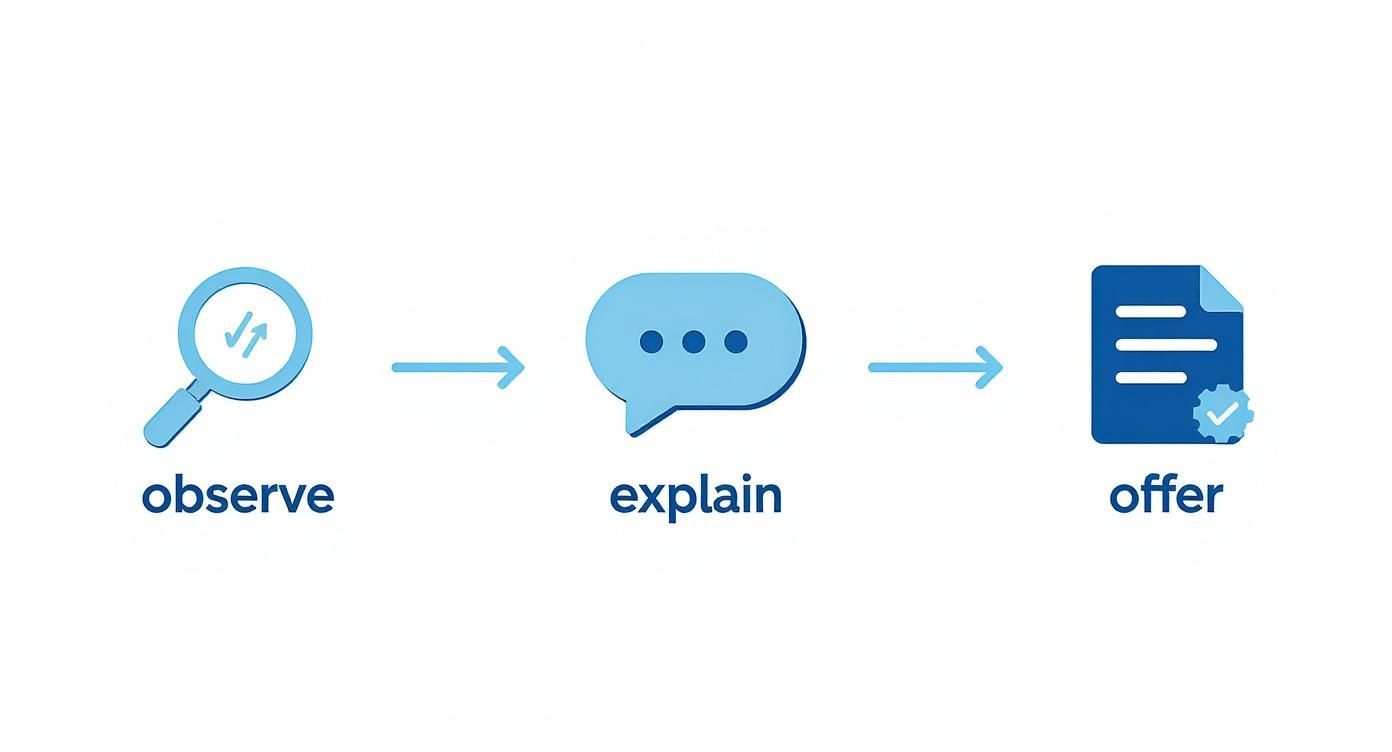
The best techs observe an issue, explain the benefit of regular maintenance, and then offer the plan. It’s about solving a problem, not hitting a sales quota.
Key Automation Features That Actually Matter
When you’re shopping for software, it’s easy to get sidetracked by flashy features you’ll never use. Cut through the noise and focus on the core functions that will actually move the needle on your efficiency and customer retention. The goal is to find a system that makes managing your hvac maintenance plan template a breeze, from the moment a customer signs up until they renew a year later.
Here’s a no-fluff checklist of what you absolutely need:
- Automated Scheduling & Reminders: The software needs to automatically book tune-ups based on when the customer signed up and fire off text or email reminders. This alone will slash your no-show rate.
- Recurring Billing & Payments: This is a non-negotiable. The ability to securely save a customer’s card and automatically charge them every month or year is the key to consistent cash flow.
- A Solid CRM: You need one central place to see everything about a customer—their contact info, service history, and agreement details. It has to be easy for both the office and the techs in the field to access.
- Renewal Tracking & Alerts: The system must give you a heads-up long before a contract expires. This gives you plenty of time to reach out and lock in that renewal without scrambling at the last minute.
The single biggest game-changer here is recurring billing. Switching customers from writing one big check a year to a small, automatic monthly payment makes the plan feel more like a Netflix subscription than a major purchase. We’ve seen sign-up rates skyrocket just from this one change.
The Real-World Impact: From Headache to High-Performing
To really see the difference, let’s look at how things change when you go from a manual process to an automated one. The table below breaks down the day-to-day reality.
Manual vs Automated Service Plan Management
| Task | Manual Process (The Headache) | Automated Process (The Solution) |
|---|---|---|
| Scheduling Tune-Ups | Office staff spends hours on the phone, trading voicemails and manually updating calendars. It’s a logistical nightmare. | The system sends an automated reminder; the customer clicks a link to book a time that works for them. Done. |
| Collecting Payments | Chasing down checks, running cards one by one, and dealing with late or forgotten payments. It’s a cash flow killer. | Payments are processed automatically on a set schedule. Money just shows up in your bank account. |
| Tracking Renewals | Relying on a spreadsheet or calendar alerts that are easily missed. Every missed renewal is lost recurring revenue. | The system automatically flags expiring contracts months in advance, creating a pipeline of renewal opportunities. |
| Updating Customer Info | Techs scribble notes that have to be manually entered back at the office. Information gets lost or entered incorrectly. | Techs update customer records, service history, and notes directly from a tablet in the field. Info is instant and accurate. |
It’s pretty clear which side you want to be on.
This jump in efficiency is huge, especially when you multiply it across hundreds of plan members. It frees up your team from being buried in paperwork so they can focus on things that actually make you money, like talking to customers and finding new sales opportunities. Automation is what turns your maintenance program from an administrative burden into a reliable, profitable engine for your business.
Getting Your New Maintenance Program Off the Ground

You’ve put in the time to build and price a solid service agreement. Awesome. But this next part is where I see a lot of contractors drop the ball: the launch. A successful rollout is way more than just firing off an email blast. It’s a coordinated push that has to start with your own team first.
Don’t let a great idea on paper fizzle out in reality. The long-term health of your program really depends on a smooth, well-planned implementation.
First Things First: Train Your Team
Before a single customer ever hears about your new maintenance plan, every single person in your company needs to be on the same page. I’m talking about everyone from the dispatcher who picks up the phone to the tech standing in the customer’s living room.
They all have to get the value of the plan and be able to talk about it without fumbling. A confused team means confused customers, and that’s a surefire way to lose sales before you even start.
Your internal launch is arguably more important than the public one. You’re building confidence so that when a homeowner asks, “Why should I sign up for this?” your team has a real, convincing answer.
Hold a dedicated training session for this. Don’t just toss a brochure on the table. Walk them through every inch of your hvac maintenance plan template:
- The “Why”: Break down what’s in it for the customer (fewer surprise breakdowns, lower energy bills) and what’s in it for the company (predictable revenue, smarter scheduling).
- Each Tier, Explained: Go over every membership level. What are the specific perks? Repair discounts? Priority service? What does a tune-up actually include at each level?
- Handling Objections: You need to role-play the tough questions. Practice what to say when a customer hits them with, “I’ll just call you when it breaks.”
- The Sign-Up Process: Make it dead simple. Every tech has to know exactly how to get a customer signed up in the field, whether it’s on a tablet or a paper form. No friction.
Here’s the key: You’re not trying to turn your techs into slick salespeople. You’re turning them into confident educators. When your team genuinely believes the plan helps homeowners, they’ll present it with authority. That’s what builds trust.
Your Internal Launch Checklist
Getting everything coordinated from the start prevents chaos and ensures you don’t miss a critical step. Use this as your pre-flight checklist before you go public.
Get Your Marketing Materials Finalized
- Print professional brochures or one-sheets that clearly lay out the plan tiers.
- Draft the email templates you’ll use to announce the program to your existing customer list.
- Build a dedicated landing page on your website for the maintenance plan.
Set Up Your Systems
- Get your field service software configured to handle recurring payments, both monthly and annual.
- Add the new maintenance tasks into your scheduling system so tune-ups get flagged and booked correctly.
Run That Team Training
- Schedule and hold the all-hands training session.
- Make sure every truck is stocked with the brochures, forms, and any other sales aids they’ll need.
Smart Ways to Roll It Out
You don’t need a massive, expensive marketing blitz to get this going. The smartest way to launch is to build momentum with the people who already know and trust you: your current customers.
Start with a “soft launch.” Reach out exclusively to your existing customer base and give them a special introductory offer for being loyal—something like 15% off their first year. This is a powerful move for a few reasons.
First, it gets cash in the door and puts your first members on the books immediately. Second, it gives your techs a low-pressure environment to practice presenting the plan. And finally, it helps you collect testimonials and success stories you can use when you’re ready for the big public launch.
Once you have a solid group of members and some positive feedback, then you can start widening your net. Announce the program on your social media, put a banner on your homepage, and start tucking a brochure into every invoice you send out. This phased approach builds a much stronger foundation for success down the road.
Common Questions About HVAC Maintenance Plans
Navigating the details of service agreements always brings up a ton of questions. Even with a solid HVAC maintenance plan template, certain sticking points seem to pop up for contractors time and time again.
Let’s tackle some of the most frequent ones. Getting these details right is what separates a decent program from a truly profitable one, and the answers usually come down to clear communication and smart options for your customers.
What Is the Most Important Clause to Include?
While every piece of your agreement matters, the “Scope of Work and Exclusions” section is your single best defense against future disputes. This clause needs to be crystal clear about what a customer’s membership actually covers—things like two annual tune-ups and priority service.
But more importantly, it has to spell out exactly what is not covered. Be painfully specific here. Think refrigerant costs, replacement parts for major component failures, or the labor for repairs you discover during a tune-up. A rock-solid exclusions list manages customer expectations and protects your team from doing unpaid work.
How to Get Technicians Selling More Plans
The best way to do this is to shift their mindset from “selling” to “educating.” Your techs are the trusted experts in the home, not slick salespeople. Train them to connect the plan’s benefits directly to what they’re seeing on the job.
Instead of a generic pitch, they can say something like, “I noticed some corrosion on this electrical connection that could cause a failure on a hot day. Our maintenance plan includes cleaning and sealing these connections to prevent that from happening.” It’s real, it’s relevant, and it solves a potential problem for the homeowner.
Combine this educational approach with a direct incentive. A simple bonus for each sign-up gives them a personal stake in the program’s success. This blend of expert advice and a clear incentive is an incredibly effective combination for boosting plan enrollment.
Deciding Between Monthly and Annual Payments
The best answer is simple: offer both. Doing this lets you cater to different customer preferences and budgets, which will always maximize your sign-up rate.
An annual, one-time payment is fantastic for your business’s upfront cash flow, and a lot of customers prefer the “set it and forget it” approach.
However, a smaller recurring monthly fee often feels way more manageable and less intimidating. Framing a $240 plan as just $20 per month makes it an easier immediate “yes,” almost like a Netflix subscription. The most successful contractors present both options side-by-side, often with a slight discount for the annual payment to highlight its value and encourage that upfront commitment. You’re removing a major reason for them to say no.
Ready to stop wrestling with an outdated website and start attracting profitable install jobs and service agreements automatically? HVAC Growth Machine provides a complete, done-for-you system—from a high-converting website with an online estimator to automated email follow-ups that turn prospects into loyal customers. Secure your exclusive service area and see how we can fill your calendar by visiting https://hvacgrowthmachine.com.





Founder of HVAC Growth Machine