

Creating an effective HVAC marketing plan is essential for growing your business in today’s competitive market.
At HVAC Growth Machine, we’ve seen firsthand how a well-crafted strategy can transform a company’s success.
This guide will walk you through the key steps to develop an HVAC marketing plan that delivers real results.
From understanding your target audience to choosing the right marketing channels, we’ll cover everything you need to know to boost your HVAC business.
Who Is Your HVAC Business Serving?
Pinpoint Your Unique Value
What sets your HVAC business apart from the competition? It might be your 24/7 emergency service, eco-friendly solutions, or unmatched expertise in smart home systems.
Companies that clearly communicate their unique strengths often see significant growth in their client base.
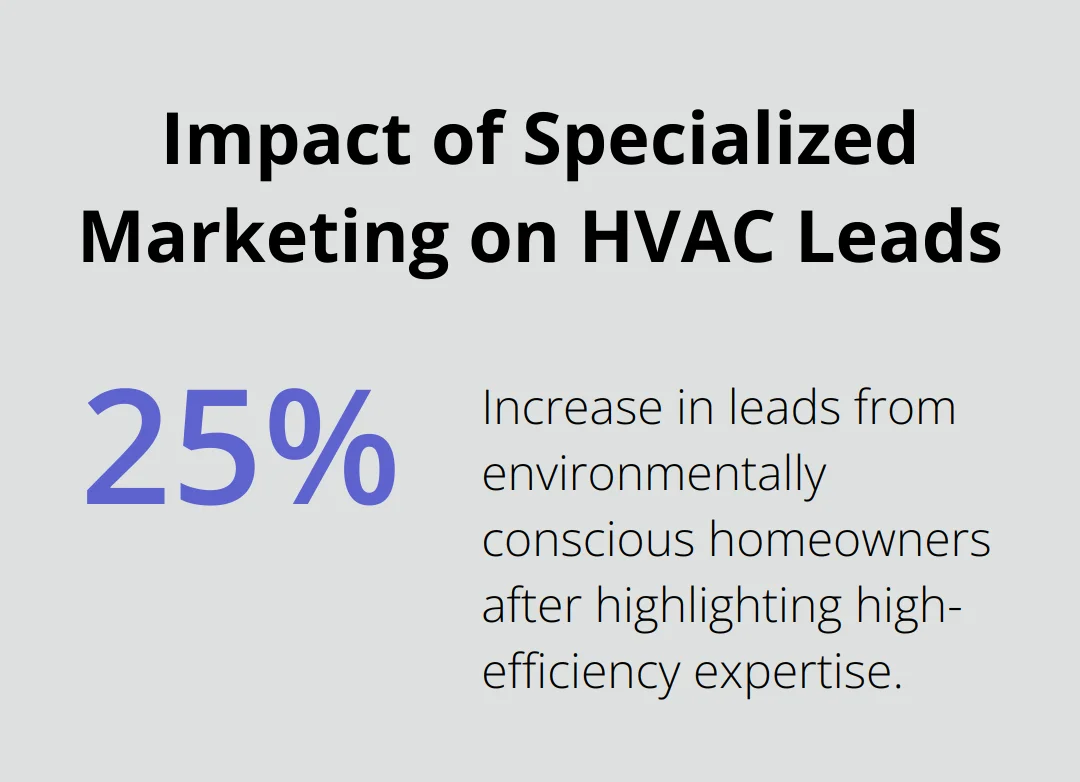
For instance, an HVAC company that specialized in high-efficiency systems saw a 25% increase in leads from environmentally conscious homeowners after highlighting this expertise in their marketing materials.
Know Your Ideal Customer
Who benefits most from your services? Are you targeting homeowners in upscale neighborhoods or commercial property managers? Understanding your ideal customer helps you speak their language and address their specific needs.
Key performance indicators (KPIs) can help you track and understand your customer base better.
Monitoring these metrics can provide valuable insights into your business performance and customer preferences.
Scope Out the Competition
What strategies do other HVAC companies in your area use to attract customers? Examine their HVAC websites, social media presence, and advertising.
This research can reveal gaps in the market that you can fill.
For example, if you notice competitors don’t offer online booking, implementing this feature could give you an edge.
New technologies like AI job assistants and smarter scheduling tools are becoming available to help HVAC businesses improve their services and customer experience.
Leverage Local Data
Use local demographic data to inform your marketing strategy. The U.S. Census Bureau provides free access to detailed community information.
This data can help you identify areas with aging housing stock (which might need HVAC upgrades) or neighborhoods with high homeownership rates.
If census data shows a high percentage of seniors in your service area, you might focus on marketing energy-efficient systems that can help reduce utility bills – a key concern for those on fixed incomes.
Tailor Your Approach
Once you’ve gathered this information, you can tailor your marketing approach to resonate with your target audience.
This personalized strategy will help you stand out in a crowded market and attract the customers who are most likely to benefit from your services.
The next step is to choose the right marketing channels to reach these potential customers effectively.
Where Should You Focus Your HVAC Marketing Efforts?
Optimize for Local SEO
Local search engine optimization (SEO) plays a vital role for HVAC companies. To improve your local SEO:
- Claim and optimize your Google Business Profile
- Maintain consistent NAP (Name, Address, Phone number) across online platforms
- Collect and respond to customer reviews
- Create location-specific website content
Leverage Social Media Platforms
Social media offers excellent opportunities to connect with potential customers. Facebook remains the most popular platform (with 2.9 billion monthly active users as of 2023). T
o effectively use social media:

- Share helpful HVAC tips and energy-saving advice
- Showcase before-and-after photos of your work
- Respond quickly to customer inquiries and comments
- Use targeted ads to reach specific demographics in your service area
Implement Email Marketing Strategies
Email marketing proves to be one of the most cost-effective marketing channels. For HVAC businesses:
- Send seasonal maintenance reminders
- Provide exclusive discounts to email subscribers
- Share educational content about HVAC systems and energy efficiency
- Use segmentation to send targeted messages based on customer history
Explore Pay-Per-Click Advertising
Pay-per-click (PPC) advertising can drive immediate traffic to your website. When setting up PPC campaigns:
- Focus on location-specific keywords (e.g., “AC repair in [your city]”)
- Create compelling ad copy that highlights your unique selling points
- Use ad extensions to provide additional information (like phone numbers and service areas)
- Set up conversion tracking to measure ad effectiveness
Invest in Video Marketing
Video content has become increasingly popular and effective in recent years. Try to incorporate video into your marketing strategy:
- Create how-to videos for simple HVAC maintenance tasks
- Showcase your team and company culture
- Provide virtual tours of completed projects
- Share customer testimonials in video format
These marketing channels offer diverse ways to reach and engage your target audience. The next step involves measuring and optimizing your efforts to ensure you achieve the best possible results from your marketing investments.
How To Measure HVAC Marketing Success
Set Specific, Measurable Goals
Your HVAC marketing efforts should start with clear objectives. Instead of vague goals, try to set specific targets.
For example, “generate 50 new HVAC installation leads per month” or “improve website conversion rate by 15% in the next quarter.”
A study by CoSchedule found that marketers with a documented strategy are 313% more likely to report success. When setting your HVAC marketing goals, use the SMART framework: Specific, Measurable, Achievable, Relevant, and Time-bound.

Use Analytics Tools
Google Analytics provides insights into your website’s performance. It shows which marketing channels drive the most traffic, which pages visitors spend the most time on, and where potential customers drop off in your sales funnel.
For social media, platforms like Facebook and Instagram offer built-in analytics. These tools help you understand which posts resonate with your audience and when they’re most likely to engage with your content.
Call tracking software is another essential tool for HVAC businesses. It attributes phone calls to specific marketing campaigns, giving you a clearer picture of which strategies drive actual leads.
Make Data-Driven Decisions
Use data from your analytics tools to inform your marketing decisions. If you notice that your email campaigns have a higher conversion rate than your social media ads, allocate more resources to email marketing.
Similarly, if certain keywords drive more qualified leads in your PPC campaigns, focus more of your budget on those terms. Let the data guide your strategy, rather than relying on gut feelings or assumptions.
Test and Refine Continuously
Marketing requires ongoing testing and refinement. A/B testing (where you compare two versions of a marketing asset) can help you optimize your campaigns over time.
For example, an HVAC company tested two versions of their service page. The version that included customer testimonials and a clear call-to-action button outperformed the original by 27% in terms of lead generation.
Small improvements can add up over time. A 5% increase in conversion rate might not seem significant, but over a year, it could mean dozens of additional leads for your HVAC business.
Track Return on Investment (ROI)
Ultimately, the success of your marketing efforts boils down to ROI. Track how much you spend on each marketing channel and compare it to the revenue generated from those channels.
Some metrics to consider include:
- Cost per lead
- Customer acquisition cost
- Lifetime value of a customer
- Conversion rates
These metrics will help you determine which marketing strategies provide the best return and where to allocate your budget for maximum impact.
Final Thoughts
An effective HVAC marketing plan requires careful planning, execution, and continuous refinement. You must understand your unique value, identify ideal customers, and analyze competitors to create a solid foundation. The right marketing channels, such as local SEO, social media, and email campaigns, will help you reach your target audience effectively.
The true power of an HVAC marketing plan lies in its ability to adapt and improve. Set clear, measurable goals and use analytics tools to track performance, which will allow you to make data-driven decisions.
This process of testing, measuring, and refining ensures your marketing efforts remain effective in a changing marketplace.
Take action now and implement these strategies to boost your HVAC business’s visibility and attract more qualified leads.
If you need expert guidance in crafting and implementing an HVAC marketing plan that works, consider partnering with HVAC Growth Machine.
Our team of marketing professionals can help you increase leads and sales through tailored marketing strategies.





Founder of HVAC Growth Machine