

HVAC digital marketing is a system for attracting homeowners who are already looking for your services online and turning them into booked, profitable jobs. Instead of relying on old-school advertising, this approach uses tools like Google search, paid ads, and email automation to create a predictable flow of real, qualified leads.
Why Your HVAC Business Needs a Digital Marketing Blueprint
Let's be honest: your next high-value installation job isn't coming from a flyer or a billboard—it's being decided on Google.
Think about it. When a homeowner's AC gives out on the hottest day of the year, their first move is to grab their phone and search. If your business doesn't show up right at that moment, you're invisible to your best potential customers.
A solid digital marketing plan isn't a "nice-to-have" anymore; it's essential for survival and growth. Don't think of it as a checklist of random tasks, but as a connected, always-on engine built to generate leads for your business.
The Core Components of HVAC Growth
This engine runs on four critical pillars that work together to attract, engage, and convert customers in your service area. Each piece has a specific job, but they all share the same goal: filling your calendar with profitable work.
- A High-Converting Website: This is your digital showroom. It has to be dead simple to use, look great on a phone, and be designed to turn visitors into leads with crystal-clear calls-to-action and trust-building elements like reviews.
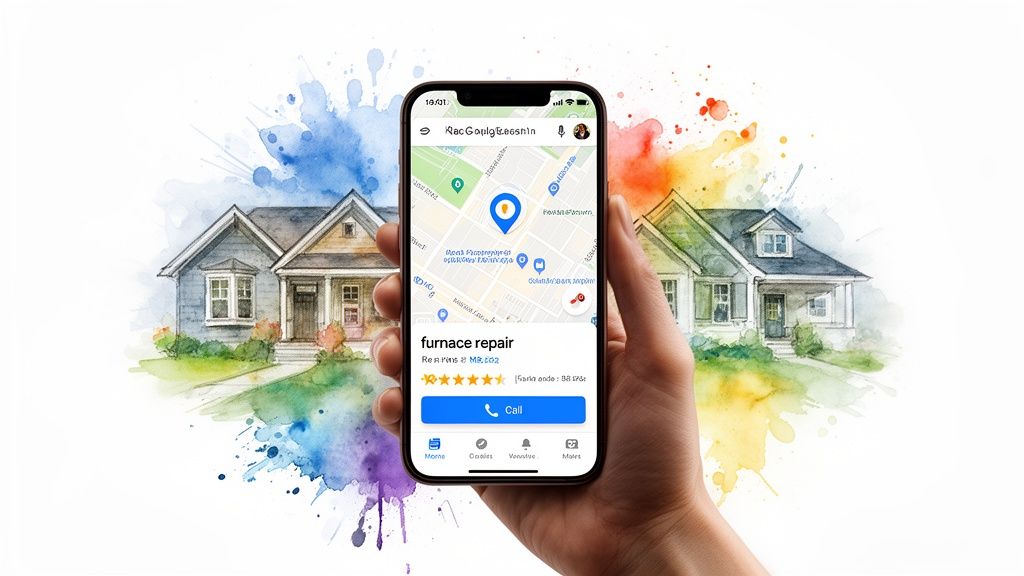
- Dominant Local SEO: This is how you get found on the Google Map Pack when someone searches "furnace repair near me." It’s the single best way to capture high-intent customers who need your help right now.
- Precision-Targeted Paid Ads: SEO is a long game. For immediate results, paid ads on platforms like Google get you to the top of the page instantly, driving urgent service calls and quote requests from day one.
- Automated Follow-Up Systems: Not every lead is ready to buy on the spot. Automated email and text messages can nurture those prospects, follow up on quotes you've sent, and remind past clients it's time for maintenance, squeezing every bit of value out of each lead.
This diagram shows you exactly how these pieces fit together to create a growth engine.
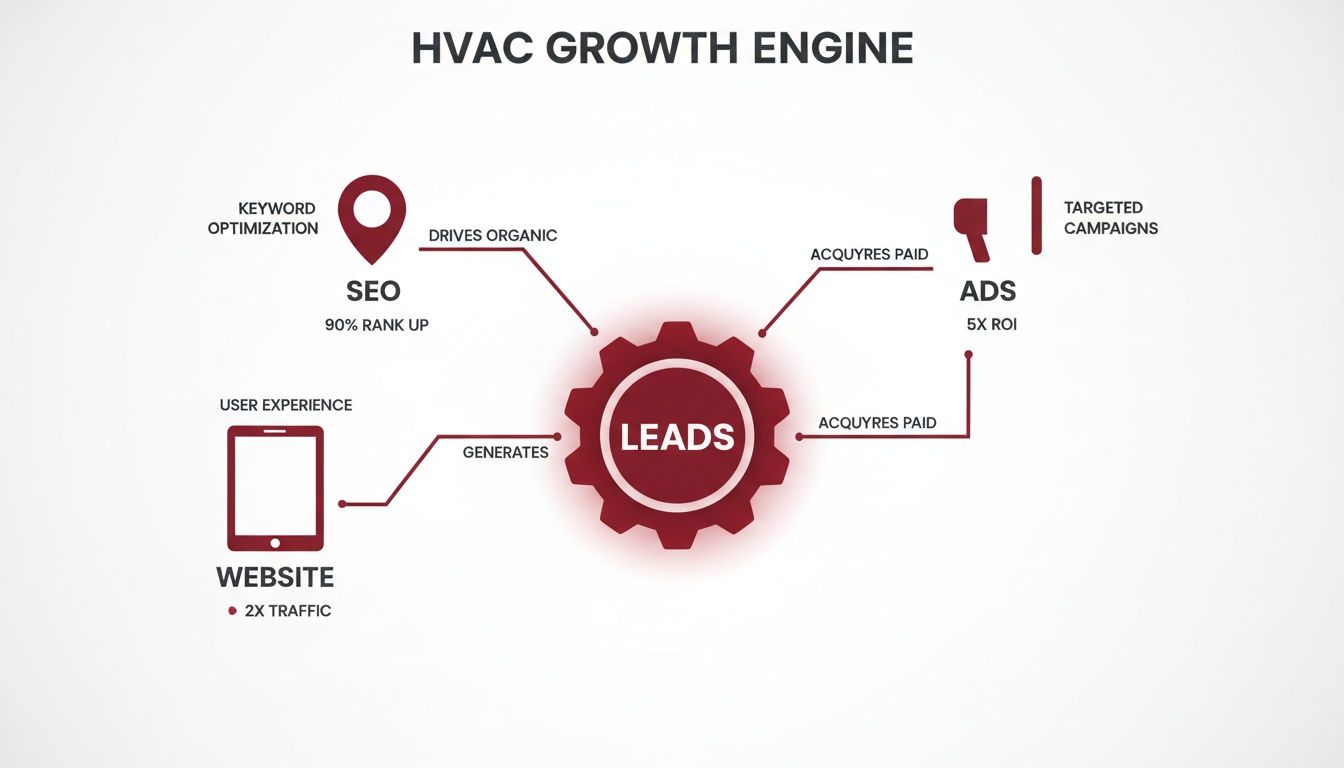
When your website, SEO, and paid ads all work in harmony, they create a reliable, nonstop flow of leads for your business. The numbers don't lie. A staggering 85% of HVAC companies report that digital marketing is far more effective than traditional methods.
In fact, 60% of all HVAC leads now come from online channels, and leads from SEO have a massive 14.6% close rate—compare that to just 1.7% for old-school outbound leads.
The modern blueprint for a thriving HVAC business is a cohesive digital system. It's about moving past just getting clicks and instead delivering a predictable stream of qualified, appointment-ready leads straight to your dispatch team.
By pulling these strategies together, you’re basically building a 24/7 digital sales team that consistently brings your ideal customers to you. For a step-by-step guide on putting this all together, check out our guide on how to create an HVAC marketing plan that works.
Building Your Digital Showroom: The High-Converting HVAC Website
Your website is more than just an online brochure—it's your single most valuable sales asset and the absolute cornerstone of your entire marketing strategy.
Think of it as your digital showroom. When a potential customer arrives, is it clean, easy to navigate, and does it immediately make them feel like they're in the right place? Or is it cluttered, confusing, and look like it hasn't been updated since 2010?
Too many HVAC websites are just digital business cards. They list a few services, slap a phone number on top, and call it a day. A high-converting website, on the other hand, is a tool engineered for one job: turning a curious visitor into a paying customer. It anticipates what they need and guides them straight to taking action, whether that's calling your office or booking an estimate.
This all starts by understanding who's visiting your site. Most of the time, it's someone on their smartphone, often stressed because their AC just died in the middle of July. A clunky, hard-to-read mobile experience is the fastest way to lose that lead forever.
Core Elements of a Website That Actually Books Jobs
To turn your site from a static online sign into a lead-generation machine, you have to build it on a foundation of conversion. This isn't about fancy graphics; it's about focusing on the customer's journey from the moment they land on your page.
Here’s what truly matters:
- Mobile-First Design: The vast majority of local searches happen on a phone. Your site has to be flawless on a small screen. That means big, easy-to-tap buttons, dead-simple navigation, and lightning-fast load times. These aren't suggestions—they're non-negotiable.
- Can't-Miss Calls-to-Action (CTAs): Don't make people hunt for your phone number or a "Book Now" button. Your contact info and main CTAs need to be staring them in the face on every single page, often in a "sticky" header that stays put as they scroll.
- Unmistakable Trust Signals: Homeowners need to feel safe about their decision. Your website's job is to build that confidence. Use photos of your actual technicians, not stock photos. Showcase real customer testimonials with names and faces. And plaster any certifications, guarantees, or awards where they can't be missed.
A great HVAC website answers three questions for a visitor in about three seconds: "Am I in the right place?", "Can I trust this company?", and "How do I contact them?". If you fail on any of those, they're hitting the back button and calling your competitor.
Beyond the Phone Call: Tools That Capture Every Lead
While a phone call is great, not every potential customer is ready to pull the trigger right away. Some are just researching costs for a future system replacement or comparing quotes after business hours. You have to capture these leads, too, or you're leaving a ton of money on the table.
This is where smart lead capture tools make all the difference:
- "Free Estimate" Forms: A simple, well-placed form lets people request a quote without the pressure of a phone call. This is perfect for snagging those high-ticket installation leads from customers who are still in the research phase.
- Online Scheduling Widgets: Why make them call? Integrate a scheduling tool that lets visitors book their own maintenance appointment or service call directly from your site. That convenience alone is a huge differentiator.
- Financing Information: Don't hide your financing options. Display them clearly and up-front. This tackles one of the biggest roadblocks to a new system sale before it even becomes an objection.
By designing your website to serve both the emergency customer and the long-term planner, you create a powerful, 24/7 sales tool. To go deeper on this, you can learn more about the specifics of a high-performance HVAC website design that consistently brings in new jobs.
Winning Local Searches with HVAC SEO
When a homeowner's AC gives out in the middle of a July heatwave, they're not digging through the Yellow Pages. They're grabbing their phone and searching on Google. Being at the top of those search results is the single most effective way to get a constant flow of high-intent leads knocking on your door.
This is where HVAC SEO (Search Engine Optimization) comes into play. It’s the art and science of making your website and online presence irresistible to search engines, proving that you are the most relevant, trustworthy contractor for a local search.
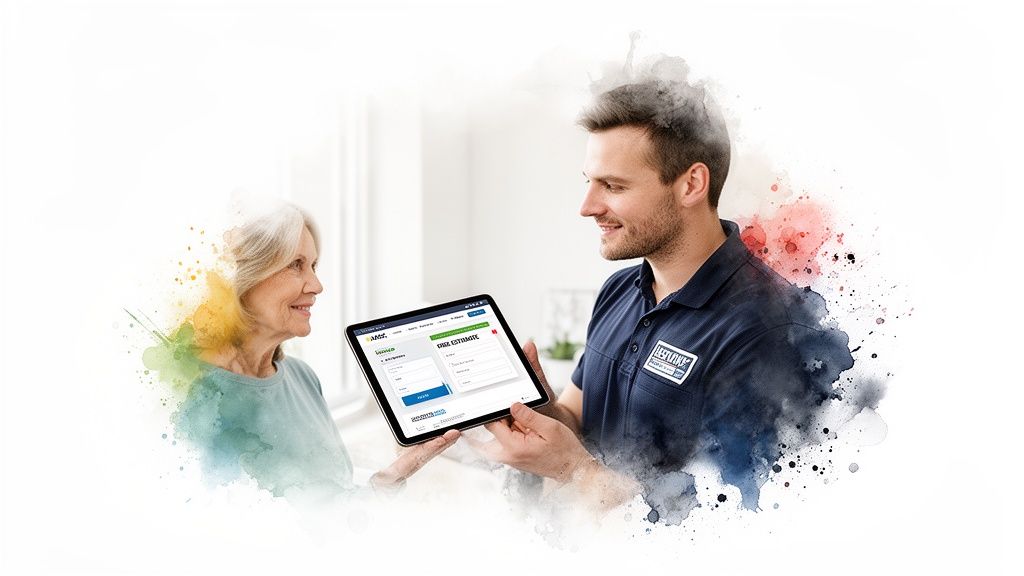
Think of Google as a librarian for the entire internet. When someone asks for the best resource on "furnace repair in Dallas," the librarian doesn't just pull one off the shelf at random. It recommends the source that’s well-written, frequently referenced by others, and a perfect match for the request. SEO is simply how you convince that librarian that your website is the best one there.
The Three Pillars of HVAC SEO
A solid SEO strategy is built on three core pillars. Get all three right, and you'll dominate your local market. But if you neglect even one, you'll struggle to get the visibility you need.
- On-Page SEO: This is everything on your actual website that signals to Google what you do and where you do it. This means having dedicated pages for services like "AC Installation" and "Heater Maintenance" and optimizing them with location-specific phrases like "emergency AC repair in Phoenix."
- Off-Page SEO: This covers all the things you do away from your website to build its authority and trust. This includes getting mentioned on other local business sites, earning a steady stream of positive reviews, and building a consistent profile across online directories.
- Technical SEO: This is the nuts and bolts of how your website works. It’s all about ensuring your site is fast, secure, mobile-friendly, and easy for Google’s bots to crawl and understand. A slow or broken website is a huge red flag for search engines.
To really pull ahead of the competition in your service area, a strong local SEO strategy is non-negotiable. For a practical, step-by-step guide to improving your local search rankings, check out this ultimate local SEO checklist.
Dominating the Google Map Pack
For any HVAC contractor, the holy grail of SEO is landing a spot in the Google Map Pack. That's the box with three local businesses and a map that shows up at the very top of the results for searches like "hvac companies near me."
The Map Pack is prime real estate. Since 46% of all Google searches have local intent, showing up here puts your business directly in front of homeowners who are ready to make a call right now. It is the single most important goal of any local HVAC SEO campaign.
Your ticket into the Map Pack is your Google Business Profile (GBP). This free listing is your official business profile on Google, and keeping it optimized is crucial. This isn’t a "set it and forget it" task—it needs consistent attention to show Google that you're an active, reputable, and relevant local company.
Key Actions for Google Business Profile Optimization
To turn your GBP into a lead-generating machine, you need to focus on these critical elements:
- Complete and Accurate Information: Make sure your business name, address, phone number, and service areas are 100% consistent everywhere online, from your website to every directory. Inconsistencies confuse Google and will absolutely hurt your rankings.
- Consistent Positive Reviews: You need a system to actively ask every happy customer for a review. A constant stream of fresh, positive reviews is a massive ranking factor and one of the best trust signals for potential customers.
- Regularly Upload Photos: Post high-quality photos of your team, your branded vans, and completed jobs. This proves you’re a real, active business and helps you stand out from competitors who have no photos or just use generic stock images.
- Utilize Google Posts: Use the "Posts" feature to share company news, seasonal tune-up specials, or helpful tips. This keeps your profile fresh and engaging, which Google loves to see.
By mastering these pillars—and especially by optimizing your Google Business Profile—you can transform your online presence from a simple digital sign into a powerful magnet for high-intent customers who need your help immediately.
Driving Immediate Leads with HVAC Paid Advertising
While a strong HVAC SEO strategy is the foundation for long-term, sustainable growth, it's a marathon, not a sprint. When you need your phone to ring today, paid advertising is the most powerful tool in your toolbox. It’s the fastest, most direct way to put your business in front of homeowners at the exact moment they need you.
Think of it as renting the best billboard in town, right at the top of Google's search results. Instead of waiting months to earn that spot organically, you can pay to be there instantly. This is absolutely critical for capturing those emergency repair jobs and high-intent customers who are ready to make a decision right now.
The numbers don't lie. While the average cost per click for a search ad can hover around $29.03, the cost to acquire a new customer often lands between $296–$350. One case study even showed a Denver HVAC company using Google Ads increased its monthly leads from 32 to 103 and grew revenue from $290,000 to $610,000 in just six months. The potential is massive.
Differentiating Google Ads and Local Services Ads
For HVAC contractors, Google offers two main flavors of paid advertising, and knowing the difference is key to a profitable campaign. Using the right tool for the right job prevents you from just burning through your budget.
- Google Local Services Ads (LSAs): You've seen these. They're the "Google Guaranteed" listings sitting at the very top of the page, even above the normal ads. The model here is simple and powerful: you pay per qualified lead, not per click. This makes LSAs an absolute no-brainer for generating immediate calls for urgent jobs.
- Traditional Google Ads (PPC): These are your classic search ads. They offer much deeper control and are perfect for targeting bigger, more complex, high-profit jobs. You can build entire campaigns around specific keywords like "new ac unit cost" or "ductless mini-split installation," letting you get in front of customers who are in the research phase for a new system.
The smartest strategy combines both. Use LSAs to capture the urgent, high-volume repair calls that keep your techs busy every day. Then, use traditional Google Ads to target the lucrative, high-margin installation projects that really drive your revenue.
The Anatomy of a High-Performing Ad Campaign
Just throwing money at Google isn't a strategy. A successful paid ad campaign needs a few critical pieces working together perfectly. Without them, you're just gambling with your marketing budget. You can learn more about crafting a winning strategy in our complete guide to HVAC paid ads.
Essential Elements for Paid Ad Success:
- Compelling Ad Copy: Your ad is your digital elevator pitch. It has to speak directly to the homeowner's pain point and offer a clear, immediate solution. Powerful phrases like "Same-Day AC Repair" or "$50 Off Your First Service Call" grab attention and give them a reason to click your ad over a competitor's.
- High-Intent Keyword Targeting: Focus on the keywords that signal a customer is ready to buy, not just browse. A search for "ac unit making weird noise" is informational. A search for "emergency ac repair [your city]" is a desperate plea for help. Bidding on the right keywords is everything.
- Optimized Landing Pages: This is the most overlooked—and most critical—piece of the puzzle. Never send paid traffic to your generic homepage. Clicks need to go to a dedicated landing page built for one thing and one thing only: conversion. This page must have a headline that matches the ad, a simple contact form, and a big, bold phone number, with all other distractions stripped away.
When you align your ad copy, keywords, and landing pages, you create a smooth, frictionless path for the customer. This turns your advertising spend from a simple expense into a predictable, highly profitable machine that consistently books jobs.
Turning Leads into Jobs with Smart Automation
Getting a lead is just the first step. The hard truth of any hvac digital marketing strategy is that most prospects aren't ready to buy the moment they reach out. They're probably shopping around, comparing quotes, or just waiting for the right time. If you don't have a system to stay in front of them, those leads you worked so hard to get will go cold, fast.
This is where smart automation comes in. Think of it as your tireless digital sales assistant. Using automated email and text message sequences, you can nurture leads, follow up consistently, and build trust without you or your team having to lift a finger. It’s the safety net that ensures no lead ever falls through the cracks.
And let's be clear, this isn't about spamming people. The goal is to provide real, consistent value that positions your company as a trusted expert, not just another contractor trying to make a sale.
Essential Automation Sequences for Every HVAC Company
A well-built automation system works silently in the background, gently guiding potential customers toward booking a job. Instead of your team trying to remember every single follow-up call or email, these sequences run 24/7, guaranteeing a professional and timely response at every stage.
Here are a few of the must-have automation sequences every single HVAC company should have in place:
- The Welcome Series: The second a new lead fills out a form on your website, an instant email or text should hit their inbox. This simple touch confirms you got their request and lets them know what to expect next. It’s a small detail that makes a huge first impression.
- The Unclosed Quote Follow-Up: A homeowner gets a quote but doesn't pull the trigger. What happens next? An automated sequence can check in a few days later, maybe reminding them of a key benefit of the system you proposed or highlighting your financing options. That gentle nudge is often all it takes to turn a "maybe" into a signed contract.
- Seasonal Maintenance Reminders: For your existing customers, automation is an absolute goldmine. You can set up simple sequences that automatically send an email in the spring to book an AC tune-up, and another in the fall for furnace maintenance. It’s effortless, recurring revenue.
Automation transforms your follow-up process from a manual, inconsistent chore into a reliable, revenue-generating machine. It bridges the critical gap between initial interest and a booked job, ensuring you get the absolute most out of your marketing spend.
Nurturing Leads with Value, Not Just Sales Pitches
The most powerful automation doesn't just sell—it helps. When you send useful content, you build credibility and stay top-of-mind. So, when that prospect is finally ready to make a decision, your company is the only one they’ll think of.
Think about building short email sequences around helpful topics that actually solve a homeowner's problems. And beyond just scheduling, look into how tools like automated quote generation can dramatically speed up your sales cycle and close more deals.
Examples of Value-Driven Content:
- Energy-Saving Tips: An email with a subject like "5 Simple Ways to Lower Your Energy Bill This Summer" provides instant value and shows you know your stuff.
- System Longevity Guides: For customers who just got a new installation, send a short guide on "How to Get the Most Life Out of Your New HVAC System."
- Filter Change Reminders: A simple, automated text every three months saying, "Friendly reminder from [Your Company] to change your air filter!" is incredibly helpful and keeps your brand visible.
This approach ensures that even the leads who aren't ready to buy today will see you as the go-to expert when the time is right.
Measuring Marketing Performance That Matters
So, how do you know if your marketing is actually making you money? Or just making you feel busy?
A real hvac digital marketing strategy isn't about getting clicks or likes. It's about producing measurable, profitable results. This last piece of the puzzle—tracking and attribution—is what separates a marketing expense from a true growth investment.
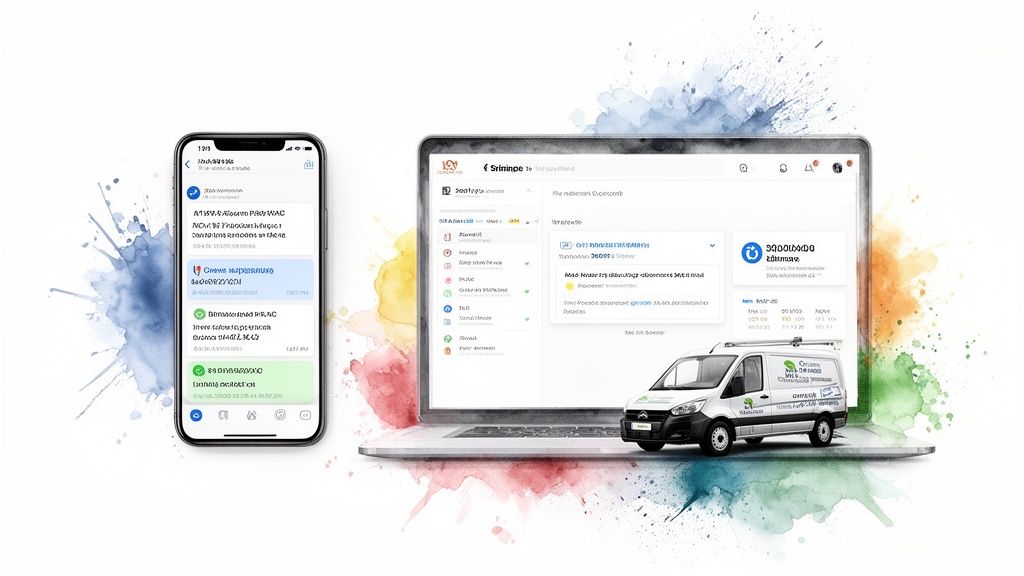
Too many contractors get stuck chasing "vanity metrics." These are the numbers that look impressive on a report but don't actually mean anything for your bottom line—things like website traffic, impressions, and clicks. They show activity, sure, but they don't help with payroll or buy new vans.
Focusing on Metrics That Drive Revenue
If you want a predictable growth engine, you have to shift your focus. You need to obsess over the numbers directly tied to your bank account. These are the metrics that tell you what’s working and, more importantly, where to put your next dollar for the highest possible return.
Your most critical numbers should be:
- Cost Per Qualified Lead: How much are you actually spending to get a real homeowner on the phone or to fill out a service request form? This shows you how efficient each channel is.
- Appointment Booking Rate: Of all the qualified leads coming in, what percentage actually get a job scheduled on your calendar? This is a huge indicator of lead quality.
- Revenue Per Marketing Channel: Is SEO, Google Ads, or your email list bringing in the most profitable work? Knowing this lets you scale what’s already proven to work.
The Power of True Attribution
Here's the million-dollar question: How do you connect a specific marketing campaign to a specific job? How do you know for sure that $20,000 system install came from that one Google Ad you're running, and not just a random organic search?
Without clear attribution, you’re flying blind. You end up making budget decisions based on guesswork instead of cold, hard data.
This is where tools like call tracking become a complete game-changer.
Call tracking technology assigns a unique, trackable phone number to each of your marketing channels. When a customer calls the number they saw on your Google Ads campaign, for instance, the system automatically ties that call back to that specific ad and keyword. It creates a direct, undeniable line from a single marketing action to a real customer phone call.
Getting this level of clarity is incredible. It lets you see exactly which ads are driving high-value installation calls versus which ones are just bringing in low-profit repair calls. Armed with that data, you can confidently double down on the campaigns generating real revenue and cut the ones that are just burning through your budget. You’re no longer guessing—you’re optimizing your entire marketing system for maximum profit.
Common Questions About HVAC Digital Marketing
If you're thinking about getting serious with digital marketing, you probably have a few questions. And you should—it's a big investment. Here are some of the most common ones we hear from HVAC owners, answered in plain English.
How Much Should My HVAC Company Spend on Marketing?
There’s no magic number here, but a good starting point is 5-10% of your total revenue.
But honestly, the raw dollar amount isn't what matters. The real focus should be on return on investment (ROI). A newer company trying to grab market share might need to push that percentage higher, while an established local leader might spend a bit less just to stay visible.
The goal is always profitability. A $5,000 monthly campaign that brings in $50,000 of new installs is a win. A "cheap" $1,000 campaign that generates crickets is a waste. Start with a budget you can actually track and be ready to pour more gas on the channels that are proven to make you money.
Is SEO or Paid Advertising Better for Getting HVAC Leads?
This isn't an "either/or" fight. They’re two different tools for two different jobs, and they work best together.
Think of it like this: Paid ads are like a faucet. You turn the handle, and leads start flowing immediately. It's perfect for filling the schedule right now. SEO is like digging a well. It takes more time and upfront work, but once it’s established, you have a sustainable source of high-quality, low-cost leads for the long haul.
A smart strategy uses paid ads for that instant gratification while you build out your SEO well for future, sustainable growth. One fills the calendar today, the other builds your business for tomorrow.
How Long Does HVAC SEO Take to Actually Work?
Let's be clear: SEO is a marathon, not a sprint. It’s all about building genuine authority and trust with Google, and that simply doesn't happen overnight.
You'll often see some encouraging early signs—like better visibility in the local map pack or movement for less competitive keywords—within the first 2-3 months.
But for the big, money-making terms like "AC installation [your city]," you should plan on 6-12 months of consistent, focused work to see significant, top-of-page rankings. The great part is that the authority you build today compounds over time and keeps paying you back for years. Paid ads stop the second you stop paying. Good SEO doesn't.
What Are the Most Important Metrics to Track?
It’s way too easy to get distracted by "vanity metrics" like clicks and impressions. They feel good, but they don't pay the bills. To know if your marketing is actually working, you have to track the numbers that connect directly to your bank account.
Focus on these key performance indicators (KPIs):
- Cost Per Lead (CPL): How much does it cost you to get a qualified phone call or form submission?
- Cost Per Acquisition (CPA): What's the final, all-in cost to land a new, paying customer?
- Appointment Booking Rate: What percentage of your leads actually turn into a scheduled job?
- Return on Ad Spend (ROAS): This is the big one. For every dollar you put into ads, how many dollars in revenue did you get back?
These are the numbers that tell you the real story. They show you exactly what's profitable so you can make decisions based on data, not guesswork.
Ready to stop guessing and start growing with a predictable system? The HVAC Growth Machine is a complete, done-for-you solution that builds your high-converting website, dominates local search, and implements the tracking needed to see true ROI. Secure your service area and see how we can fill your calendar with profitable install jobs at https://hvacgrowthmachine.com.





Founder of HVAC Growth Machine