

In the competitive HVAC industry, generating leads is only half the battle. The real challenge is converting those hard-won prospects from your HVAC website, paid ads, and local SEO efforts into booked jobs and profitable service contracts. Many HVAC businesses see promising leads, from online estimate requests to service inquiries, go cold simply because they lack a systematic follow-up process. This isn't a minor leak; it's a significant drain on your marketing budget and a major obstacle to growth.
Effective lead nurturing bridges this crucial gap, transforming initial interest into tangible revenue. It’s the engine that runs between your lead generation tactics, like HVAC email marketing and paid ads, and your sales team's closing efforts. By implementing proven lead nurturing best practices, you create a consistent, automated system that engages potential customers, builds trust, and keeps your company top-of-mind when they’re ready to make a purchase decision. The goal is to ensure every dollar spent on HVAC digital marketing yields the highest possible return.
This guide reveals 10 essential strategies tailored specifically for HVAC contractors. We’ll move beyond generic advice and provide actionable blueprints for everything from automated email sequences and strategic call tracking to leveraging Google Local Service Ads for high-intent leads. To efficiently manage inbound inquiries and ensure no potential client is missed, consider leveraging technology like the Best AI Receptionist for HVAC Companies, which can help qualify and route calls effectively. These tactics are designed to fill your calendar, maximize your marketing ROI, and build a predictable growth engine for your business.
1. Automated Email Sequences for Lead Nurturing
Automated email sequences are triggered workflows that deliver targeted messages to leads based on their actions, behaviors, or lifecycle stage. For HVAC businesses, these sequences are a game-changer in lead nurturing best practices, acting as a tireless 24/7 sales representative. They systematically guide prospects from an initial online estimate request to a confirmed booking, building trust and keeping your brand top-of-mind.
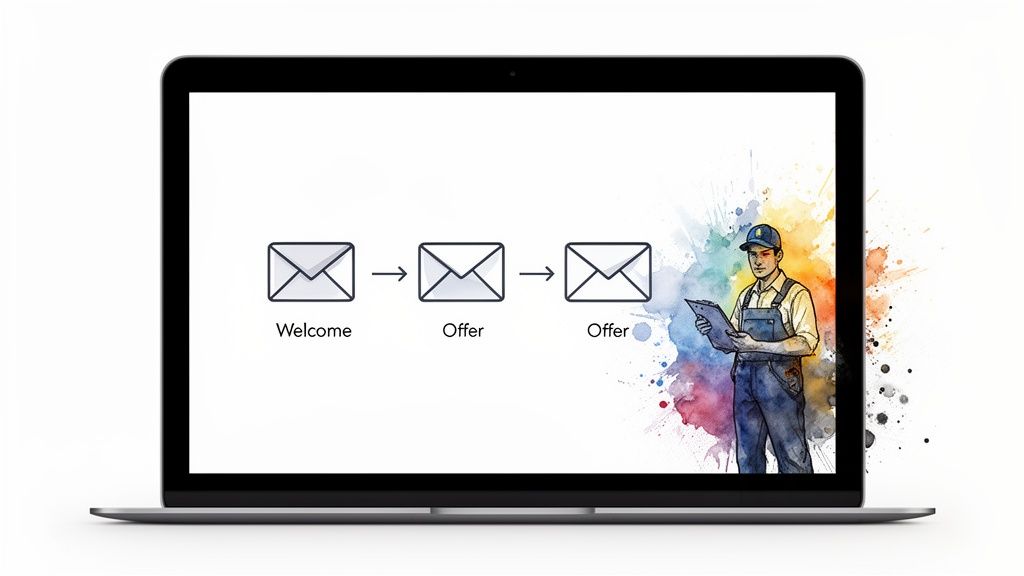
This approach addresses common sales hurdles proactively. By anticipating questions about financing, system warranties, or seasonal promotions, you remove friction from the buying process. To optimize your email outreach, dive deeper into the core principles of Email Automation Marketing.
Actionable Tips for Implementation
-
Start with a Foundational Sequence: Create a 5-email workflow for new leads:
- Welcome & Value Proposition: Immediately confirm their inquiry and reinforce why your company is the best choice.
- Objection Handling: Address common concerns like cost by highlighting financing options or payment plans.
- Social Proof: Share customer testimonials, 5-star reviews, or a case study snippet.
- Limited-Time Offer: Introduce a compelling offer, like a discount on a new system or a free diagnostic.
- Final Call-to-Action: A last-chance reminder to book their appointment or consultation.
-
Segment Your Audience: Don't send the same message to everyone. Create different sequences for leads interested in emergency repairs, full system replacements, or maintenance plans. Each has unique needs and timelines.
-
Monitor and Optimize: Track your open and click-through rates. Aim for an open rate above 20% and a click-through rate over 5%. If your numbers are low, test new subject lines, content, and send times. Many HVAC leads respond well to emails sent early in the morning or later in the evening.
-
Include Clear CTAs: Every email must have a clear, singular goal. Use prominent buttons or links that direct leads to “Book a Free Estimate Now” or “Call Us With Questions.”
2. Lead Scoring and Qualification
Lead scoring is a system that assigns numerical values to prospects based on their behaviors, demographic information, and engagement level, indicating their sales readiness. For HVAC businesses, this is one of the most crucial lead nurturing best practices because it filters the noise, allowing your sales team to focus their time and energy on leads most likely to convert into booked jobs. It quantifies intent by tracking signals like visiting a financing page or requesting an online estimate.
This data-driven approach transforms your follow-up process from a guessing game into a precise, efficient operation. Instead of treating every lead the same, you can prioritize homeowners who have shown clear signs of purchase intent, such as viewing specific high-efficiency system pages multiple times. To better understand how these prospects are defined, you can explore the fundamentals of what constitutes a business lead.
Actionable Tips for Implementation
-
Establish a Weighted Scoring Model: Assign points based on specific actions and attributes. A typical HVAC model might look like this:
- Website Behavior (40%): Visiting the pricing page (+15), using the online estimate tool (+20), viewing warranty information (+10).
- Lead Source (30%): A direct website form fill (+25) is more valuable than a social media lead (+10).
- Demographic Fit (20%): Is the lead within your primary service area? (+20). Is it for a residential property? (+10).
- Engagement (10%): Opening a nurturing email (+2), clicking a link (+5).
-
Set MQL and SQL Thresholds: Define clear point thresholds for when a lead moves to the next stage. For example, a lead reaching 30 points becomes a Marketing Qualified Lead (MQL) and enters a more aggressive nurturing sequence. A lead hitting 60+ points becomes a Sales Qualified Lead (SQL), triggering an immediate alert for a sales rep to call.
-
Implement Negative Scoring: Just as important as positive scores are negative ones. Subtract points for actions that indicate a poor fit. For example, assign -50 points if the lead is outside your service area or requests commercial services when you only serve residential clients.
-
Automate Sales Alerts: Integrate your scoring system with your CRM to automatically notify your sales team when a lead crosses the SQL threshold. The goal should be to contact these high-value leads within one hour of them becoming "sales-ready."
3. Personalized Online Estimate Tools and Calculators
Interactive online estimate tools transform your website from a static brochure into a dynamic lead-generation machine. These calculators allow prospects to input specific details about their home and HVAC needs, such as system size, efficiency level, and installation complexity, to receive an instant, personalized price estimate. This approach is a cornerstone of modern lead nurturing best practices, as it dramatically reduces friction in the buying journey. It qualifies leads by capturing detailed information upfront and builds immediate trust by offering pricing transparency.
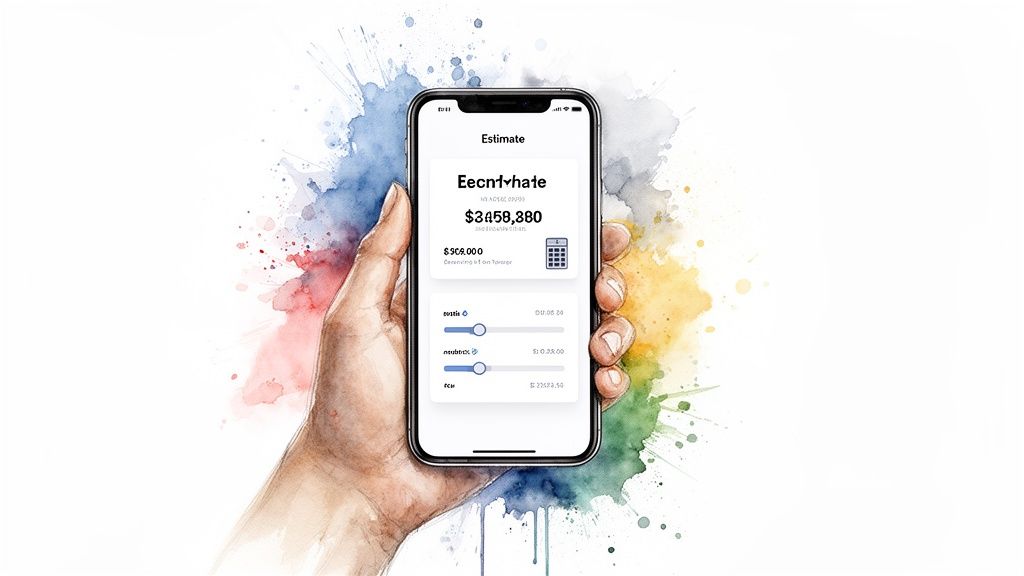
By providing instant value, you turn cautious website visitors into engaged, qualified leads who are ready for a meaningful follow-up call. This proactive tool addresses the primary question on every homeowner's mind: "How much will this cost?" To fully leverage this strategy, it's crucial to understand the power of instant quote tools for HVAC websites.
Actionable Tips for Implementation
-
Keep It Short and Simple: Limit your calculator to a maximum of 5-8 questions. Research consistently shows that completion rates drop significantly with each additional field. Focus only on the essential information needed to generate an accurate initial estimate.
-
Use Conditional Logic: Make the experience smart and intuitive. Ask about the system type first (e.g., furnace, AC, heat pump), then use their answer to present relevant follow-up questions about size or efficiency. This avoids asking irrelevant questions and keeps the user engaged.
-
Integrate with Automation: Connect your calculator directly to your email marketing or CRM platform. The moment a prospect completes the estimate, trigger an automated email that delivers a summary of their quote and outlines clear next steps, such as booking an in-home consultation.
- Showcase Affordability: Don't just show a total price. Break the estimate down into manageable monthly payments by including a financing breakdown (e.g., "$XX down, $YY/month"). This reframes the cost and makes a high-value system replacement feel much more accessible to the average homeowner.
4. Strategic Call Tracking and Attribution
Strategic call tracking involves assigning unique phone numbers to different marketing channels, such as Google Ads, Facebook campaigns, and website landing pages. For HVAC businesses, where a phone call is often the most valuable conversion, this practice is essential. It provides undeniable proof of which marketing efforts are driving actual customer calls, allowing you to measure ROI with precision and eliminate wasteful spending.
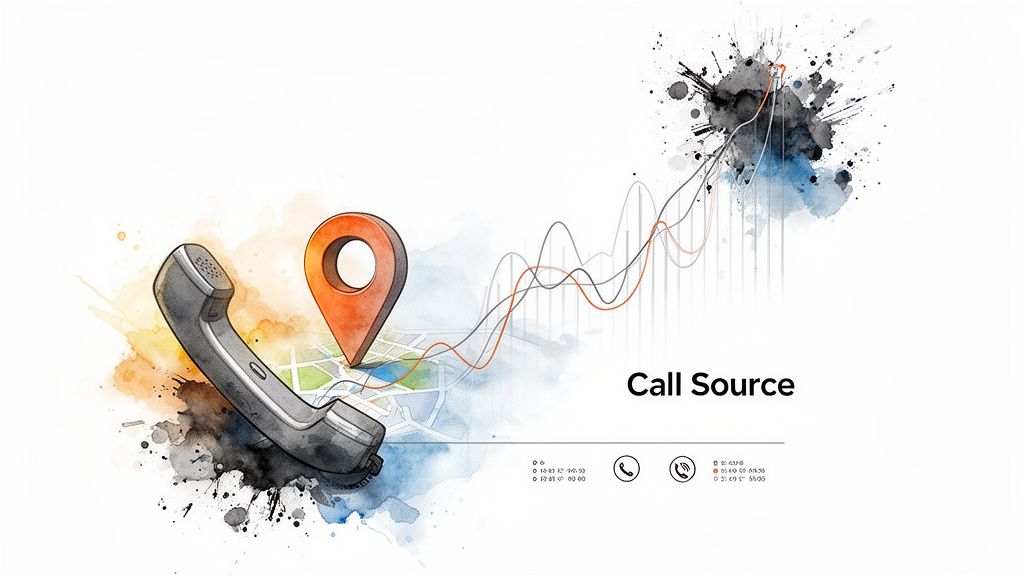
This level of attribution transforms your marketing from a guessing game into a data-driven strategy. By understanding exactly which keywords or ads lead to profitable installation and repair jobs, you can confidently reallocate your budget to the highest-performing campaigns. Platforms like CallRail are popular in the home services industry for connecting calls directly to marketing sources, providing clarity on your lead generation.
Actionable Tips for Implementation
-
Assign Granular Tracking Numbers: Don't just track platforms; get specific. Use different numbers for:
- Paid Channels: Google Ads vs. Facebook Ads vs. Local Services Ads.
- Campaign Type: A/C Repair campaign vs. Furnace Installation campaign.
- Keyword Groups: Branded keywords ("Your HVAC Company") vs. non-branded ("ac repair near me").
- Offline Sources: Direct mail flyers, truck wraps, and yard signs.
-
Record and Analyze Calls: Use call recordings for quality assurance and training your customer service representatives. Monthly, review the top 20 longest calls to identify what successful messaging and sales techniques your team is using.
-
Filter for Lead Quality: Track call duration to filter out low-quality leads. Calls lasting over two minutes typically indicate a serious inquiry, while those under 30 seconds are often spam or misdials. This helps clean up your conversion data.
-
Build a Revenue-Focused Report: Connect call data to your CRM to track the entire customer journey. Create a report showing calls by source → appointments booked → jobs completed → total revenue generated. This is one of the most critical lead nurturing best practices for proving marketing value.
5. Google Local Service Ads (LSA) and Google Guarantee
Google Local Service Ads (LSA) are a powerful tool for capturing high-intent leads at the exact moment they need help. These map-integrated ads appear at the very top of local search results for queries like "AC repair near me," placing your business in front of customers ready to book a service. For HVAC contractors, LSAs are a cornerstone of effective lead nurturing best practices because they generate pre-qualified, local leads, while the accompanying Google Guarantee badge builds immediate trust and credibility.
This "pay-per-lead" model, rather than pay-per-click, ensures your marketing budget is spent only on verified customer inquiries. The Google Guarantee, which offers customer protection for jobs booked through LSAs, acts as a powerful conversion tool, differentiating you from competitors who lack this official endorsement and reassuring homeowners that they are making a safe choice.
Actionable Tips for Implementation
-
Achieve Google Guarantee Eligibility: This is non-negotiable for LSA success. Ensure your business is fully licensed and insured, and be prepared for all customer-facing technicians to undergo and pass mandatory background checks conducted by Google. This badge is your ticket to the top of search results.
-
Optimize Your Google Business Profile (GBP): Your LSA performance is directly tied to your GBP. Maintain a robust profile with high-quality photos of your team and equipment, detailed service descriptions for installations and repairs, and consistently updated posts about seasonal promotions or tips.
-
Prioritize Rapid Response: Speed is critical in the LSA ecosystem, as leads are often sent to multiple providers. Aim to respond to all incoming LSA leads within one hour during business hours. The HVAC companies that answer first are the ones that win the job.
-
Build a Strong Review Profile: A high star rating (aim for 4.8 or higher) directly impacts your ad's visibility and lead quality. Actively solicit reviews from every completed job, especially those that originated from an LSA lead, to create a self-sustaining cycle of positive social proof.
6. Seasonal Campaign Segmentation and Timing
The HVAC industry operates on predictable seasonal cycles, with demand for AC repair surging in the summer and furnace services peaking in the winter. Seasonal campaign segmentation is the practice of aligning your lead nurturing strategies with these cycles. It involves creating distinct messaging, ad campaigns, and automated workflows that address the specific pain points relevant to each season, from emergency cooling needs to preventative fall maintenance.
This targeted approach is one of the most effective lead nurturing best practices because it ensures your marketing message is timely and relevant. By anticipating whether a lead is worried about a summer heatwave or preparing for a winter freeze, you can tailor your content to their immediate concerns. This builds credibility and dramatically increases the likelihood of conversion, preventing you from marketing furnace replacements to a homeowner in a hot climate in July.
Actionable Tips for Implementation
-
Build an Annual Campaign Calendar: Plan your marketing activities a year in advance. Identify your peak seasons (e.g., May-August for cooling, November-February for heating) and schedule major campaigns to launch 4-6 weeks before they begin. This gives you ample time to warm up leads.
-
Develop Core Seasonal Themes: Create four primary campaign pillars:
- Spring Maintenance: Focus on tune-ups and efficiency. Offer promotions like “Book in April, Get 15% Off” to spread out demand.
- Summer Cooling: Shift to urgent messaging around AC repairs, replacements, and emergency services.
- Fall Inspections: Promote furnace safety checks and system preparation before the cold hits.
- Winter Heating: Emphasize reliability, emergency furnace repair, and high-efficiency heating systems.
-
Adjust Ad Budgets Seasonally: Allocate your spending where it will have the most impact. A proven model is to spend 40% of your annual budget during your two primary peak seasons, 15% in the shoulder months (spring/fall), and 10% on off-season maintenance campaigns.
-
Create Season-Specific Email Sequences: Segment your email lists based on seasonal relevance. Nurture AC leads with content about energy savings during the summer, then switch to heating-focused education and offers as winter approaches. Avoid sending irrelevant offers that can lead to unsubscribes.
7. Content Marketing and Educational Lead Nurturing
Content marketing is a strategic approach focused on creating and distributing valuable, relevant, and consistent content to attract and retain a clearly defined audience. For HVAC companies, this means becoming a trusted educational resource. By answering a prospect's questions about system sizing, efficiency ratings, or repair costs before they even pick up the phone, you build authority and nurture leads who are still in the early research phase.
This educational approach is a cornerstone of modern lead nurturing best practices, positioning your brand as the expert guide in a complex, high-stakes purchase decision. Instead of a hard sell, you provide genuine help, which builds the trust necessary to win the job when the customer is finally ready to buy. This method is particularly effective for attracting organic traffic and nurturing leads who are not yet prepared for a direct sales conversation.
Actionable Tips for Implementation
-
Start with Foundational Content: Begin by creating 5 to 10 core content pieces that address the most common questions your sales team receives. Focus on high-intent local keywords like "how much does furnace replacement cost in [Your City]" or "signs of AC failure in older homes." This directly targets prospects actively seeking solutions.
-
Create Content Clusters: Structure your content for maximum SEO impact. Develop a main "pillar" page, such as a comprehensive "Ultimate Guide to Buying a New AC Unit," and support it with shorter blog posts that link back to it, covering specific topics like "Understanding SEER2 Ratings" or "Financing Options for New HVAC Systems."
-
Leverage Video for Visuals: HVAC systems are complex and visual. Create short videos explaining how a heat pump works or showing what happens during a system installation. This content is highly engaging and perfect for sharing on social media and in email campaigns.
-
Gate High-Value Content: Offer more in-depth resources, like a "Pre-Season HVAC Maintenance Checklist" or a "Home Energy Efficiency Guide," in exchange for an email address. This tactic transforms anonymous website visitors into identifiable leads that you can add to your automated nurturing sequences.
8. Multi-Touch Attribution and Marketing Mix Modeling
Multi-touch attribution moves beyond crediting only the final click before a lead converts. It assigns value to multiple marketing touchpoints across the entire customer journey, revealing the true contribution of each channel. For HVAC businesses, this provides a clear picture of how TV ads, Google Ads, local SEO, and email campaigns work together to secure a new customer, making it a cornerstone of advanced lead nurturing best practices.
This sophisticated analysis prevents you from mistakenly cutting budget from a channel that plays a crucial early role, like brand awareness from a Facebook ad, just because it wasn't the "last click" before a form submission. Understanding the complete path to conversion allows for smarter budget allocation and a more effective marketing mix. For a deeper dive, platforms like Google Analytics 4 offer powerful, free attribution tools.
Actionable Tips for Implementation
-
Start with a Simple Model: Begin with a linear or time-decay attribution model before adopting more complex algorithmic ones. A linear model gives equal credit to each touchpoint, providing a balanced initial view of your customer journey.
-
Implement UTM Tracking: Consistently use UTM parameters on all digital campaigns (emails, social media ads, PPC). This is non-negotiable for accurately categorizing traffic and conversions by source, channel, and campaign, feeding clean data into your attribution model.
-
Analyze Common Customer Paths: Use your analytics to identify the most frequent sequences of interactions. You might find a common path is: Facebook Ad (Awareness) → Google Search (Consideration) → Google Business Profile (Decision) → Phone Call (Conversion). This insight proves the value of all three channels working in concert.
-
Review and Adjust Quarterly: Last-click data can be misleading. Review your multi-touch attribution reports every quarter to understand the true performance of each channel. Reallocate your marketing budget based on which channels are most effectively contributing to leads and sales, not just final interactions.
9. Retargeting and Remarketing Campaigns
Retargeting is a powerful digital advertising strategy that keeps your HVAC brand visible to people who have already visited your website but left without converting. By using pixel-based tracking on platforms like Google and Facebook, you can serve targeted ads to these previous visitors as they browse other sites, reminding them of the solutions you offer and encouraging them to return. This is one of the most cost-effective lead nurturing best practices for HVAC businesses because you are engaging a warm audience that has already shown interest.
This approach directly addresses the reality that most people don't book an expensive HVAC service on their first visit. For example, a homeowner who viewed your financing options page can be retargeted with an ad highlighting "0% APR for 24 months." This transforms a passive website visit into an active, multi-touchpoint conversation, significantly boosting the likelihood they will come back and book a consultation.
Actionable Tips for Implementation
-
Create Granular Audience Segments: Don't treat all website visitors the same. Build distinct audiences to deliver hyper-relevant ads:
- General Visitors: All users who visited your site in the last 30 days.
- Pricing Page Viewers: Prospects who viewed service or system pricing pages.
- Financing Page Visitors: Leads actively researching payment options.
- Estimate Form Drop-offs: Users who started but didn't complete an online estimate request.
-
Develop Tailored Ad Creative: Match your ad message to the audience's intent. For pricing page viewers, serve ads featuring testimonials and competitive comparisons. For financing page visitors, create ads that clearly state your best payment plans. Always include a strong call-to-action like “Get Your Free Quote.”
-
Use Sequential Messaging: Guide leads through a narrative. Start with a general brand awareness ad for the first few days, then introduce a specific offer or social proof like 5-star reviews, and finally create a sense of urgency with a limited-time promotion.
-
Set a Frequency Cap: To avoid ad fatigue and protect your brand perception, limit ad impressions to 3-5 per person per day. Bombarding a potential customer can do more harm than good.
-
Test Video Retargeting: Use platforms like YouTube and Facebook to retarget visitors with short video testimonials or quick maintenance tips. Video often has a much higher engagement rate than static image ads.
10. Customer Review Management and Social Proof Integration
Active review management is the process of systematically collecting, responding to, and showcasing customer feedback across crucial platforms like Google, Yelp, and your website. For HVAC contractors, integrating this social proof into your lead nurturing is a powerful strategy. It builds a foundation of trust before a technician ever steps foot in a customer's home, validating your expertise and reassuring leads they are making the right choice.
This approach directly addresses a lead's natural skepticism. When prospects see authentic, positive feedback from neighbors in their community, it overcomes hesitation and shortens the sales cycle. By strategically placing testimonials and 5-star ratings in your marketing, you leverage your happiest customers to convert new ones, making this one of the most effective lead nurturing best practices available.
Actionable Tips for Implementation
-
Automate Your Review Requests: Use your CRM or scheduling software to automatically send a review request via email or SMS within 24 hours of a completed service call. This ensures you capture feedback while the positive experience is still fresh in the customer's mind.
-
Integrate Social Proof into Nurture Emails: Dedicate at least one email in your automated follow-up sequence to social proof. Feature a compelling customer quote, a screenshot of a 5-star Google review, or a link to a recent case study. Frame it with a subject line like, “See Why Your Neighbors Trust [Your Company Name].”
-
Respond to Every Review, Especially the Negative Ones: A prompt and professional response to all reviews shows you are engaged and value customer feedback. This is particularly crucial for negative reviews, as a thoughtful reply can turn a poor experience into a demonstration of excellent customer service. Learning how to properly address criticism is a key skill; for a detailed guide, see these tips on how to respond to a negative Google review.
-
Showcase Reviews on High-Impact Pages: Don't hide your best reviews on a single "testimonials" page. Embed dynamic review widgets on your homepage, service pages, and especially on your "Request an Estimate" landing page to boost conversion rates at the most critical point of the lead's journey.
10-Item Lead Nurturing Best Practices Comparison
| Solution | 🔄 Implementation Complexity | ⚡ Resource Requirements | ⭐ Expected Effectiveness | 💡 Ideal Use Cases | 📊 Key Advantages |
|---|---|---|---|---|---|
| Automated Email Sequences for Lead Nurturing | Medium — setup + ongoing optimization | Low–Medium — email platform, copy, CRM integration | ⭐⭐⭐⭐ — improves conversion; 10–20% email→appointment | Nurture cold/online leads, follow-up after inquiry | 24/7 scalable nurturing, measurable lift, lowers CPA |
| Lead Scoring and Qualification | High — model building & tuning | Medium–High — data collection, analytics, CRM rules | ⭐⭐⭐⭐ — prioritizes high-probability leads; +20–30% win rate | High lead volume, improve sales efficiency and routing | Focuses sales effort, faster sales cycle, clearer handoffs |
| Personalized Online Estimate Tools and Calculators | Medium–High — logic + price maintenance | Medium — dev, accurate pricing data, CRM integration | ⭐⭐⭐⭐ — high intent qualification; 40–60% completion rates | Price-sensitive visitors, convert research-stage prospects | Increases form completions, builds trust, better-qualified leads |
| Strategic Call Tracking and Attribution | Medium–High — dynamic insertion & integrations | Medium — call platform, CRM sync, recording/legal setup | ⭐⭐⭐⭐ — reveals profitable channels; improves ROI | Phone-driven conversions, ad & keyword performance measurement | Identifies top-performing channels, coaching data, revenue attribution |
| Google Local Service Ads (LSA) and Google Guarantee | Medium — verification & eligibility checks | Low–Medium — background checks, insurance, reviews | ⭐⭐⭐⭐ — high-intent local leads; 20–35% book rate | Local "near me" searches, immediate hire-intent markets | Pay-per-lead, prominent placement, Google Guarantee trust |
| Seasonal Campaign Segmentation and Timing | Medium — calendar planning & campaign swaps | Medium — budget reallocation, seasonal creatives | ⭐⭐⭐⭐ — increases relevance and peak-season conversions | HVAC peaks (summer AC, winter heating), promo timing | Better budget efficiency, higher peak conversion, predictable planning |
| Content Marketing and Educational Lead Nurturing | Medium — content strategy & production | Medium–High — time, writing/video, SEO expertise | ⭐⭐⭐ — long-term authority; SEO traffic after 3–6 months | Early-stage research, SEO growth, trust-building over time | Cost-effective long-term, ranks for high-intent queries, nurtures leads |
| Multi-Touch Attribution & Marketing Mix Modeling | High — advanced analytics & modeling | High — extensive data, analytics expertise, time (6–12 months) | ⭐⭐⭐⭐ — optimizes spend; +15–30% ROI possible | Multi-channel programs needing strategic budget decisions | Reveals true channel contributions; informs long-term allocation |
| Retargeting and Remarketing Campaigns | Low–Medium — pixel setup and segmentation | Low–Medium — ad creative, modest spend, audience size | ⭐⭐⭐⭐ — 3–5x lower CPA vs cold acquisition | Re-engaging website drop-offs, estimate/pricing viewers | Cost-effective re-engagement, targeted objection messaging, strong ROI |
| Customer Review Management & Social Proof Integration | Low–Medium — processes + automation | Low — review tooling, staff to request/respond | ⭐⭐⭐⭐ — boosts trust, CTRs, and booking likelihood | Reputation building, Google/LSA support, conversion lift | Increases credibility, improves local rankings and ad performance |
Turn Your Digital Marketing into a Growth Machine
Transforming a list of potential customers into a schedule packed with profitable jobs is the ultimate goal of any HVAC marketing strategy. As we've explored, achieving this isn't about a single magic bullet; it's about building a cohesive, intelligent system. The lead nurturing best practices detailed in this guide serve as the essential blueprints for constructing that system, turning your marketing spend from a hopeful expense into a predictable, revenue-generating investment.
At its core, effective lead nurturing is about moving beyond one-off interactions. It’s about recognizing that a prospect who requests an online estimate, downloads a maintenance guide, or clicks on a seasonal ad is starting a journey, not ending one. Your role is to guide them through that journey with timely, relevant, and personalized communication that builds trust and demonstrates value at every single touchpoint.
Synthesizing the System: Key Takeaways
The strategies we've covered, from automated email sequences to multi-touch attribution, are not isolated tactics but interconnected components of a single, powerful engine. Let's recap the core principles that tie them all together:
- Automation is Your Scalability Engine: Manually following up with every lead is impossible. Implementing automated email sequences for new inquiries, post-estimate follow-ups, and seasonal reminders ensures no opportunity slips through the cracks. It provides a consistent, professional experience that nurtures leads 24/7.
- Data-Driven Decisions Trump Guesswork: Lead scoring, call tracking, and attribution modeling remove the ambiguity from your marketing efforts. Instead of wondering which ads work, you know precisely which campaigns are driving calls and which prospects are most likely to convert, allowing you to allocate your budget with confidence.
- Personalization Builds Trust: Generic marketing messages get ignored. By segmenting your audience based on seasonality, their position in the sales funnel, or the specific services they showed interest in (like a new AC installation versus a furnace repair), you can deliver content that speaks directly to their immediate needs.
- Proof and Credibility Seal the Deal: In a competitive local market, trust is everything. Leveraging social proof through customer review management and building credibility with educational content marketing establishes your company as the go-to authority, making the final sales conversation that much easier.
Your Actionable Next Steps to Nurturing Mastery
Putting these lead nurturing best practices into motion requires a systematic approach. The journey from theory to implementation can feel daunting, but you can start making significant progress immediately.
Begin by auditing your current process. Where are your leads coming from, and what happens the moment they enter your system? Is there a documented, automated follow-up process in place? If not, start there. Set up a simple automated email sequence for web form submissions that acknowledges their request and sets expectations.
Next, focus on visibility. Implement a robust call tracking solution to understand which marketing channels are actually making your phone ring. This single step can revolutionize your ad spend by showing you what to scale and what to cut. From there, you can layer in more advanced strategies like lead scoring and retargeting campaigns to refine your approach and maximize the value of every lead you generate. The key is to start, measure, and iteratively improve. By methodically integrating these systems, you will build a resilient marketing framework that consistently drives growth for your HVAC business.
Ready to implement a comprehensive lead nurturing system without the guesswork? The HVAC Growth Machine provides an all-in-one platform designed specifically for contractors, combining a high-converting website with an instant online estimate tool and the automated marketing sequences needed to turn clicks into customers. Schedule a demo today and see how you can put these HVAC Growth Machine best practices on autopilot.





Founder of HVAC Growth Machine