

When a homeowner’s AC gives out in the middle of a July heatwave, they aren’t casually browsing. They’re grabbing their phone and searching for someone who can fix it—right now. This is exactly where Google’s Local Services Ads (LSAs) shine, putting your HVAC company right at the top of the search results the moment a desperate customer needs you.
Unlike traditional ads where you pay every time someone clicks, LSAs work on a simple, powerful pay-per-lead model. You only pay when a real, local customer calls you.
Why LSAs Are a Game Changer for HVAC Growth
Picture your ideal customer typing “emergency AC repair near me” into Google. With LSAs, your company appears at the very top—even above the regular pay-per-click ads and organic search results. This premium spot is reserved for businesses that have earned the Google Guarantee badge, and that little green checkmark is a massive signal of trust.
That badge tells potential customers that Google has already vetted your business, checking for proper licenses and insurance. In an industry where trust is paramount, that pre-verification gives you a huge leg up on the competition before they even click.
High-Intent Leads Are the Only Leads That Matter
LSAs are built to capture customers with an urgent problem. These aren’t people researching different HVAC brands for a future project; they’re homeowners with a dead furnace in January or a failing AC in August. They need a solution, and they need it fast.
The data backs this up. A staggering 88% of local searches for HVAC services result in a service call within just 24 hours. In a world where over 90% of consumers use search engines to find local help, being invisible at the top means you’re just handing jobs to your competitors. This is why LSAs, which average around $65 per lead nationally, are so effective. You pay for the call, not the click, making it a low-risk, high-reward strategy for immediate growth.
The real magic of HVAC Local Services Ads is their efficiency. You’re not just buying clicks or visibility; you’re buying direct phone calls from homeowners who have a problem and are ready to pay to get it fixed today.
To understand just how different this approach is, it helps to compare LSAs directly with the traditional Google Ads most people are familiar with.
Google LSAs vs Traditional Google Ads for HVAC
| Feature | HVAC Local Services Ads (LSAs) | Traditional Google Ads (PPC) |
|---|---|---|
| Cost Model | Pay-per-lead (you pay for valid calls/messages) | Pay-per-click (you pay when someone clicks your ad) |
| Ad Placement | Top of search results, above all other ads | Below LSAs, above organic results |
| Key Differentiator | Google Guarantee badge builds instant trust | Requires strong ad copy and landing pages to build trust |
| Targeting | Based on service area and job types (e.g., AC repair) | Based on keywords, demographics, and audience behavior |
| Lead Quality | Very high intent; customers are actively seeking service | Varies; can range from researchers to ready-to-buy |
| Setup & Management | Simpler setup; Google handles most ad creation | Complex; requires keyword research, ad creation, and bidding |
| Best For | Driving immediate, high-quality service calls | Broader brand awareness, targeting specific customer types |
While traditional PPC has its place, for driving profitable service calls quickly, LSAs are in a league of their own.
A Direct Line from Ad Spend to Revenue
The LSA model completely flips the script for HVAC contractors. Instead of gambling your marketing budget on clicks that might not convert, you’re investing directly in qualified leads—phone calls from local homeowners looking for your exact services. This creates a clean, measurable line from your ad spend straight to booked jobs.
This approach simplifies your marketing by focusing only on what matters:
- Connecting with Motivated Customers: You get in front of people who need a repair or installation now.
- Building Instant Credibility: The Google Guarantee badge does the heavy lifting for you.
- Controlling Your Costs: The pay-per-lead model means your budget is only spent on real opportunities.
Ultimately, LSAs give you a straightforward way to fill your schedule with profitable work by putting your business exactly where your best customers are already looking.
Getting Through the Google Guarantee Onboarding
Earning that little green Google Guarantee badge is easily the most important part of getting your HVAC local services ads off the ground. This isn’t just checking a box. It’s the key to getting placed at the very top of local search results and building instant trust with homeowners who need help now.
The whole process is about Google verifying your business from top to bottom. Think of it as your ticket to the game—without it, you’re not even on the field. It takes some prep work, but once you’re approved, you’ve got a serious long-term edge over the competition.
Have Your Paperwork Ready to Go
Before you even start the application, get all your documents in one place. Trust me, scrambling to find paperwork is the #1 reason this process gets delayed. Google needs to see that you’re a legitimate, licensed, and insured business they can confidently recommend to homeowners.
Make sure you have digital copies of these ready to upload:
- Business License: This is your official license from the state, county, or city. The name and address on it need to match exactly what you put in your LSA profile. Any mismatch will cause delays.
- Proof of Insurance: You’ll need a certificate of general liability insurance. Google has minimum coverage requirements, so double-check what’s needed for your area. Your insurance agent can easily get you a certificate.
- Owner ID: A clear, valid government-issued photo ID for the business owner is required to verify who you are.
Keep these files in a single folder on your computer. It’ll make the submission process a breeze and cut down on the kinds of errors that get your account flagged for a manual review.
This whole system is designed to connect a customer’s urgent search directly to a call with a trusted business like yours. The Google Guarantee is what makes it all work.
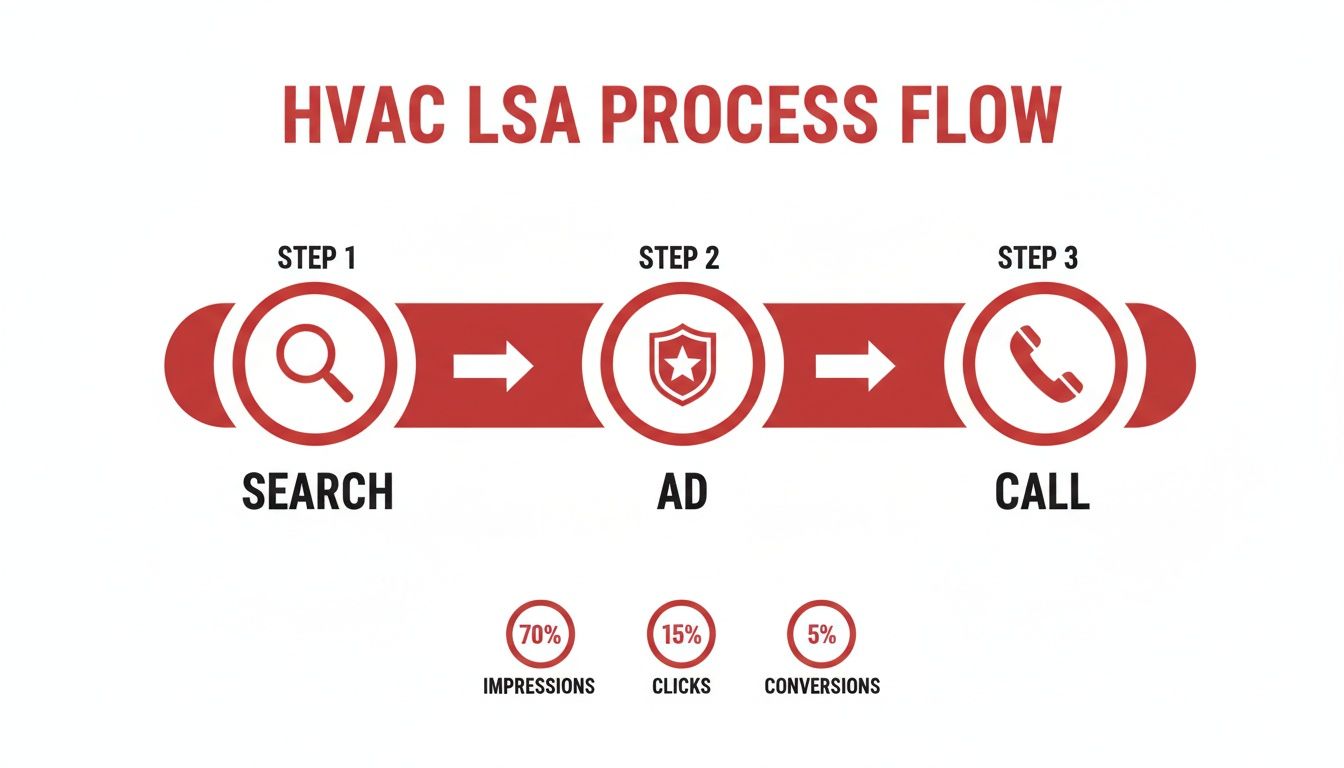
As you can see, that little green checkmark is the bridge between a homeowner’s problem and their decision to call you over anyone else.
Handling the Background Checks
The last major hurdle is the background check. Google uses third-party companies like Pinkerton to run checks on the business owner and, critically, every single employee who interacts with customers at their homes. Your technicians must pass. This is non-negotiable and is the core of the Google Guarantee promise.
Here’s the best way to manage this with your team:
- Be Upfront: Let your team know this is a requirement right from the start. Explain it’s a standard Google process to protect customers and that their info is handled securely.
- Make It Easy: Each team member will get an email with a link to start their background check. Nudge them to get it done quickly, because your entire business approval is paused until every last one is complete.
- Answer Their Questions: Some team members might have concerns. Reassure them this is becoming standard practice for any platform that sends professionals to customers’ locations.
Key Takeaway: The entire verification process, from submitting your documents to getting the final background check cleared, usually takes about 2 to 4 weeks. Any little mistake in your paperwork or a technician who drags their feet can easily stretch that out.
Remember, your Local Services Ads profile doesn’t exist in a vacuum. It needs to align perfectly with your website and, most importantly, your Google Business Profile. Consistency is key. To get that right, check out our guide on how to optimize your Google Business Profile. A little alignment upfront saves a lot of headaches later.
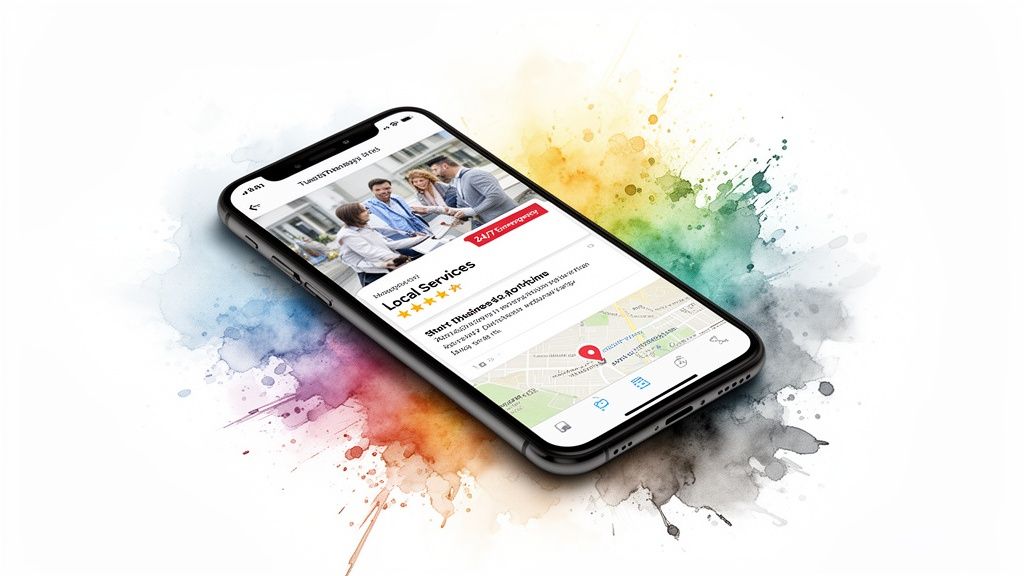
Once you’re through the verification gauntlet, it’s time to build an HVAC Local Services Ads profile that doesn’t just get seen—it gets you booked. Think of your LSA profile as your digital handshake. A weak one gets ignored, but a strong, strategic one builds instant trust and brings in profitable jobs.
This is where you stop just filling out boxes and start making deliberate choices that actually grow your business. Every single detail, from the services you list to the photo you upload, either helps or hurts your ability to land the right kind of customer.
Select Job Types That Actually Drive Profit
This is the most common mistake I see HVAC contractors make. They check off every single job type available, thinking a wider net is always better. The result? A flood of low-margin repair calls that keep your team busy but do almost nothing for your bottom line.
You have to be surgical here. Focus only on the high-value services you want more of.
- Go After Installations: If new system installs are your bread and butter, make sure “Air conditioning system installation” and “Heating system installation” are front and center. These are the jobs that move the needle.
- Cut the Low-Margin Stuff: Don’t be afraid to deselect smaller jobs like “Thermostat repair.” If those calls are just distracting your team from bigger opportunities, get rid of them.
- Lean Into Your Expertise: Is your crew killer at ductless mini-splits or geothermal systems? Make sure those specific job types are selected to pull in qualified leads who are already looking for what you do best.
This focused approach means your ad spend goes toward attracting the jobs you actually want, not just any job that makes the phone ring.
Your LSA profile is your #1 filter. By strategically selecting job types, you’re telling Google exactly which leads are worth your time and money, pre-qualifying customers before they even bother to call.
Nail Down Your Ideal Service Area
Just as important as what you do is where you do it. The service area setting in your LSA profile lets you target specific cities, counties, or even down to the ZIP code. Don’t just draw a lazy circle around your office.
Get granular. Think about which neighborhoods have your ideal customers. Are there new developments where homeowners will need system replacements soon? Are there affluent areas where people are more likely to opt for high-efficiency units? Targeting these specific zones gets your ads in front of homeowners in your most profitable territories.
This strategy also improves your team’s efficiency. A tight, well-defined service area keeps your technicians productive, letting them handle more jobs per day instead of burning daylight in traffic for a one-off call miles outside your core market.
Set Your Budget and Write a Bio That Converts
Your weekly budget is the throttle for your ad visibility. Google gives you a recommendation based on your area and job types, which is a decent starting point. But you need to manage it actively. Be ready to crank up the budget during the summer and winter peaks when demand skyrockets.
Finally, write your business bio. This is your one shot to stand out from a list of identical-looking competitors. Everyone with a Google Guarantee badge is “licensed and insured”—that’s the price of entry. You have to do better. Highlight what actually makes you different:
- Emergency Service: “Here for you 24/7 for emergency AC and furnace repairs.”
- Brand Expertise: “Factory-trained techs specializing in Trane and Carrier systems.”
- Your Story: “A family-owned business serving our community for over 20 years.”
- A Real Promise: “We back all installation work with a 100% satisfaction guarantee.”
A well-crafted profile, from job types to your business bio, transforms your LSA from a simple listing into a machine that actively filters for and attracts your absolute best customers.
Dialing In Your Bids and Budget for Peak Seasons
Getting your HVAC local services ads live is just the starting line. The real race is won in how you manage your bids and budget day-to-day. This is what separates the contractors swimming in profitable jobs from the ones who just burn through cash with nothing to show for it.
Trust me, this isn’t a “set it and forget it” game. You have to actively manage your account, especially when the weather swings and homeowners are desperately searching for help.
Unlike old-school PPC where you’re bidding on keywords, LSAs run on a “Max Per Lead” strategy. You’re basically telling Google the absolute most you’re willing to pay for a single, qualified phone call. The trick is to find that sweet spot—high enough to get seen, but not so high that you’re losing money on every job.
This is critical. Over 90% of consumers are hitting up search engines for HVAC services, and a whopping 76% of them call a business within 24 hours of that search. Things move fast. The top-performing contractors we see are dedicating a smart 7-10% of their revenue to marketing, with a huge chunk going right into high-intent channels like LSAs.
Mastering the “Max Per Lead” Bidding Strategy
Your Max Per Lead bid tells Google exactly what a lead is worth to you. A bigger bid can definitely push you higher up the results, but it doesn’t automatically mean you’ll get a better lead. The right number depends entirely on your local market competition, the service in question (a new install lead is obviously worth way more than a simple thermostat fix), and your own numbers.
A good starting point is to look at the bid range Google suggests. Then, figure out your average ticket price and what you’re willing to spend to acquire a customer. If a typical repair brings in $400 and you’re aiming for a 15% marketing cost, your max bid shouldn’t be much higher than $60.
Pro Tip: Never just set one bid and walk away. Check your lead volume and cost per lead every single day. Not enough calls coming in? Nudge the bid up a little. Getting plenty of calls but they’re too expensive? Dial it back down slowly.
For those looking to get really sophisticated, the principles of PPC bid management automation can offer valuable insights. Even though the LSA model is simpler, understanding automated adjustments based on performance data is a huge advantage.
Adjusting Your Budget for Seasonal Swings
Your business isn’t the same year-round, so why should your ad budget be? Demand for AC repairs goes through the roof during that first summer heatwave, and furnace calls flood the phone lines the moment there’s a real frost. Your budget needs to move with that demand.
- Ramp Up Early: A few weeks before the busy season hits (think late spring for cooling, early fall for heating), start increasing your weekly budget. This gets you ready to capture the tidal wave of searches before it even starts.
- Pull Back in the Slow Months: During those mild shoulder seasons, it’s smart to reduce your spending. Keep the ads running to catch the oddball jobs, but don’t waste money when search volume is low.
- Watch the Weather Like a Hawk: See a surprise heatwave or cold snap on the 10-day forecast? That’s your signal. A quick budget boost for a few days can let you completely own the search results while your competitors are still scrambling.
This flexible approach means your marketing dollars work hardest right when customers need you most.
Setting an Ad Schedule That Actually Works
Ad scheduling is easily one of the most powerful—and most overlooked—features in Local Services Ads. It gives you total control over the exact days and hours your ads are shown. This is absolutely essential for managing your lead flow and making sure every single call gets answered.
Think about it: if you don’t run a 24/7 emergency service, running ads at 2 AM is just throwing money away. You’ll end up paying for a lead from a panicked homeowner that you can’t even help.
You need to sync your ad schedule perfectly with your business hours when you have dispatchers ready to pick up the phone. A fast answer time is a major factor in Google’s ranking algorithm. By only showing ads when you can provide an immediate, professional response, you not only improve the customer experience but also boost your ad performance. This kind of smart management is at the heart of any good HVAC pay-per-lead advertising strategy.
Tracking Your ROI From Ad Spend to Revenue
So, how do you actually know if your HVAC local services ads are making you money? Clicks and calls feel good, but they don’t pay the bills. The real challenge is bridging the gap between what you spend on ads and the actual revenue that lands in your bank account.
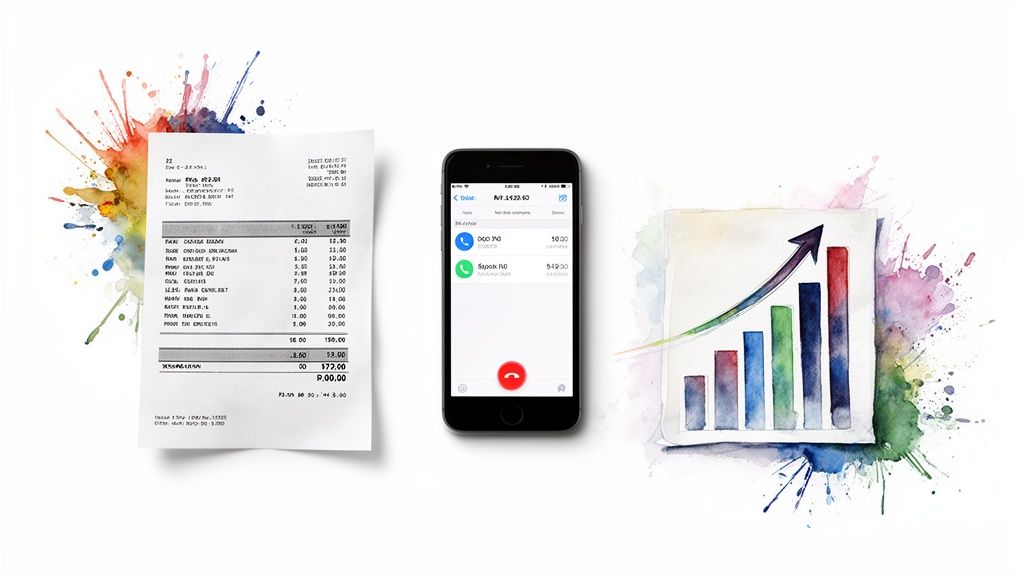
It all starts by meticulously tracking every single lead that comes from your LSAs. But it ends with something far more important: attributing closed jobs and their final invoice amounts back to the specific ad that started it all. This is the only way to calculate your true return on investment and stop guessing.
Connecting Every Call to a Job
Every single time the phone rings from an LSA, that call needs to be logged and tagged. Most savvy HVAC business owners handle this with call tracking software or right inside their CRM. This first step is absolutely critical—it creates the first link in the chain connecting your marketing dollars to a potential customer.
Without it, you’re just flying blind. You might know you spent $2,000 on LSAs and your total revenue was $20,000, but you’ll have no idea if the ads were directly responsible or if those jobs came from somewhere else entirely.
From Lead Source to Invoice Amount
Once a job is done and you send the invoice, that final dollar amount has to be recorded and matched to its original lead source. This is what closes the loop. Now you can see exactly which ads are bringing in the high-ticket system installations versus the ones that only generate low-margin repairs.
This data-driven approach is what transforms your marketing from a frustrating expense into a strategic investment. You can confidently double down on what works and cut what doesn’t.
Let’s look at a real-world example:
- Lead Cost: You pay Google $75 for a lead from your “AC Installation” LSA.
- Job Value: That lead turns into a new system installation with a final invoice of $8,500.
- Clear ROI: You turned a $75 ad spend into $8,500 in cold, hard revenue.
On the other hand, another $60 lead might only result in a $250 repair job. Both are profitable, sure, but it’s obvious where you want to focus your budget. This is the level of detail you need to truly understand how to measure marketing effectiveness.
Tracking revenue attribution isn’t about vanity metrics. It’s about tangible proof of performance. It empowers you to make smarter decisions, allocate your budget with precision, and invest only in the campaigns that fill your schedule with profitable work.
Mastering Offline Conversion Tracking
For any HVAC business, the most important conversions—like a customer booking a high-dollar job over the phone—happen offline. This makes tracking a bit of a challenge, but mastering it is the key to understanding your true performance.
This is where integrating your call tracking data with your ad platforms becomes so valuable. For a deeper dive into the technical side, the guide on unlocking true ROI with offline conversion tracking offers some excellent strategies for connecting what happens on the phone back to your digital ads.
Using Data to Optimize Future Campaigns
The revenue data you collect becomes your secret weapon for optimizing future LSA campaigns. When you know which specific job types and service areas generate the most profit, you can adjust your strategy with confidence.
Here’s how you can put this information to work:
- Refine Your Bids: Bump up your “Max Per Lead” bid for the services that consistently deliver high-value jobs.
- Adjust Your Budget: Shovel more of your weekly budget toward the campaigns that have proven their profitability.
- Target Precisely: Focus your service area settings on the specific ZIP codes that produce your best customers.
This continuous feedback loop—where real revenue data informs your ad strategy—is how you build a predictable and scalable lead generation system. You finally stop guessing and start making decisions based on the numbers that actually matter.
Don’t Make These Common (and Costly) LSA Mistakes
Even a perfectly set up HVAC local services ads campaign can burn through cash if you’re not careful. We see contractors fall into the same predictable traps all the time, wasting money and missing out on the best jobs. Sidestepping these common pitfalls is what separates a frustrating expense from a reliable, job-generating machine.
The absolute biggest mistake is not disputing invalid leads. You do not have to pay for every single call that comes through your LSA. If you get a call from a spammer, a customer way outside your service area, or even just a wrong number, you need to dispute it in your LSA dashboard right away.
Letting those bogus leads slide is like letting a refrigerant leak go unfixed—it seems small at first, but the wasted budget adds up fast and eats directly into your profit margins.
The High Cost of a Slow Response
In the world of LSAs, speed is everything. Google is actively tracking how quickly you answer the phone when a lead calls. If you consistently let calls roll to voicemail or take too long to pick up, you’re sending a huge negative signal to their algorithm, which can absolutely tank your ad ranking.
A poor response rate tells Google you’re not giving its users a good experience. The result? Your ads get shown less and less, while your competitors who answer the phone get pushed right to the top of the results.
An LSA lead is from a homeowner with a problem right now. They are not going to wait around. If you don’t answer, they are immediately calling the next HVAC company on the list, and you might still end up paying for that lead.
Ditch the “Set It and Forget It” Mindset
Another expensive habit is treating your LSA budget like a thermostat—setting it once and then walking away. Your budget needs active, hands-on management. If you don’t crank up your spending during a sudden heatwave or the first real cold snap of winter, you’re leaving a flood of high-intent searches on the table for your competition to scoop up.
You have to actively manage your budget. This means:
- Watching Your Daily Spend: Keep a close eye on how quickly your budget is getting eaten up, especially on busy days.
- Thinking Like a Weatherman: Watch the 10-day forecast and proactively bump up your budget before the peak demand hits.
- Reviewing Lead Costs: Are you still profitable at your current cost per lead? You need to check this regularly and adjust your bids if things get out of whack.
Finally, you simply cannot ignore your reviews. Your star rating and the sheer number of reviews you have are massive ranking factors for LSAs. You have to make it a non-negotiable part of your process to ask every single happy customer for a review. A steady flow of fresh, positive feedback builds trust and signals to Google that you’re a top-tier provider—and that’s the key to long-term success with your HVAC local services ads.
Your Top HVAC LSA Questions, Answered
Jumping into HVAC Local Services Ads can feel like a big step, and you’ve probably got a few questions. We hear the same ones from HVAC owners all the time, so let’s clear the air and give you the straight answers you need to get more jobs booked.
How Long Does LSA Approval Actually Take?
From start to finish, you should plan for the approval process to take anywhere from two to four weeks. This isn’t just a simple sign-up; it covers everything from Google verifying your business license and proof of insurance to running background checks on all your customer-facing team members.
Honestly, the biggest holdup we see is getting the background checks done. The faster your team submits their info, the faster you get approved. It really pays to stay on top of your people to get it done.
Can I Run LSAs and Traditional PPC Ads Together?
Absolutely. In fact, you should. We see clients have massive success with this strategy because it lets you completely dominate the top of Google.
Think about it: Your LSA with the Google Guarantee badge sits at the very top, catching all those urgent, high-intent local searches. Right below that, your traditional PPC ads can target specific, high-value keywords like “new AC unit installation” and send traffic to a dedicated landing page. You’re essentially creating a can’t-miss billboard at the exact moment a homeowner needs you.
What if I Get a Bad Lead From My LSA Campaign?
Google has your back on this one. It’s super simple to dispute any junk leads right inside your LSA dashboard. A lead is considered “disputable” if it’s obvious spam, a sales call trying to pitch you something, a wrong number, or—and this is a big one—a customer who is outside your official service area.
Once you submit the dispute and Google verifies it, they credit the cost of that lead right back to your account. This is a huge feature that protects your ad spend, making sure you only ever pay for legitimate shots at a new customer in your market.
Ready to stop guessing and start booking more profitable install jobs? The HVAC Growth Machine is a complete system that combines a high-converting website with powerful lead-generation tools, all designed specifically for your business. Secure your area and see how we can fill your calendar at https://hvacgrowthmachine.com.




Founder of HVAC Growth Machine