

Why Local SEO Matters For HVAC Contractors
Local searches connect you with homeowners who need HVAC help right now. By tuning up your Google Business Profile and crafting targeted service-area pages, you can move from obscurity to the top of local results.
In this guide, we’ll walk you through a clear roadmap:
- Google Business Profile optimization for top Map Pack placement
- Localized service-area pages to capture city-specific queries
- Review generation & management as powerful trust signals
- Schema markup to help search engines understand your offerings
- Citation cleanup & local link-building for stronger local authority
- Technical & mobile optimizations to keep your site fast on any device
Together, these tactics form the blueprint for driving calls and filling your technician’s schedule.
Next, we’ll expand on each element, giving you actionable steps you can put to work immediately.
Core Elements Of Local SEO
Think of these elements as stops on a transit line—each one moves a prospect closer to booking a service call.
“Studies show that businesses ranking in the local three-pack receive over 63% of clicks from potential customers.”
That stat alone makes it clear: map pack visibility equals more service calls.
Visualizing Key Components
This concept map breaks down how your Google Business Profile, service pages, and reviews connect to local lead generation success.
Here’s a quick overview of the core tactics and the impact you can expect:
Key Local SEO Tactics for HVAC Contractors
Below is a summary of the core tactics covered in this guide and their primary benefits for HVAC contractors.
| Tactic | Primary Benefit | Expected Impact |
|---|---|---|
| Google Business Profile Optimization | Dominates the Map Pack | +50% more local clicks |
| Service-Area Page Structuring | Targets specific city searches | +30% increase in calls |
| Review Generation & Management | Builds trust with homeowners | +20–40% lift in conversions |
| Schema Markup | Clarifies services for search engines | Enhanced SERP visibility |
| Citation Cleanup & Link-Building | Strengthens local domain authority | Improved local rankings |
| Technical & Mobile Optimization | Accelerates load times on any device | Higher mobile engagement |
With this roadmap in hand, you’re ready to claim and verify your Google Business Profile for maximum Map Pack dominance.
Check out our guide on the benefits of local SEO in our article at HVAC Growth Machine.
Up next, learn how to claim and verify your Google Business Profile and get set to own your local search results.
Stay tuned below.
Understanding GBP Core Concepts And Map Pack Visibility
Think of your Google Business Profile as a storefront on Main Street. Its sign, window display, and curb appeal pull in passersby.
Similarly, in local SEO for HVAC contractors, the elements of your GBP act like those physical touches—drawing nearby customers right to your service door.
For HVAC businesses, three core factors drive Map Pack visibility:
- Relevant Primary Categories that tell Google exactly what services you offer
- Steady Review Velocity signaling to search engines and prospects that you’re reliable
- Strong Proximity Signals matching your profile to nearby searches
Together, these elements can account for up to 60% of your Map Pack ranking weight.
| GBP Element | Benefit |
|---|---|
| Primary Category | Signals your HVAC specialization |
| Service Areas | Aligns your profile with local searches |
| Review Score | Builds trust and boosts click-through |
This quick table highlights why each field matters—and how it influences your visibility.
GBP Profile Steps
Verifying your listing is your first move. Follow these steps to claim and trust your GBP:
- Claim your listing in Google Business Profile Manager.
- Confirm NAP consistency across your website and directories.
- Complete verification by mail, phone, or instant email.
Dialed-in NAP details leave no room for confusion:
- Match your business name across every directory.
- Use the exact address and zip code everywhere.
- Keep your phone number formatted identically.
This approach ensures Google sees one, consistent identity for your HVAC business.
This view highlights your verification status, service areas, and operating hours—all managed from the same dashboard.
Key Ranking Signals
Reviews are the lifeblood of your Map Pack presence.
“Business with frequent reviews show higher engagement in the map pack.”
Review velocity is like a steady drip that keeps attention. When you ask for feedback right after a completed service, you’ll see more five-star ratings and higher placement in local searches.
Studies show that businesses with fully optimized GBP profiles see 30–80% increases in leads after optimization, with GBP factors driving roughly 50–60% of local pack ranking signals. Discover more insights about GBP findings.
Check out our guide on optimizing your GBP for a deep dive into every profile element.
Enhancing Engagement
Keeping your GBP fresh is like swapping out your storefront window display every season.
- Upload high-quality photos of your technicians, trucks, and finished jobs.
- Post timely promotions or seasonal service reminders.
- Enable booking links so prospects can schedule estimates in seconds.
- Refresh your Q&A and FAQs weekly to address the most common HVAC questions.
Each update signals activity and relevance to both homeowners and Google. Small, ongoing tweaks to your GBP can lead to significant increases in qualified leads—turning local searches into service calls.
Structuring Service Area Pages With Local Keywords And Schema Markup
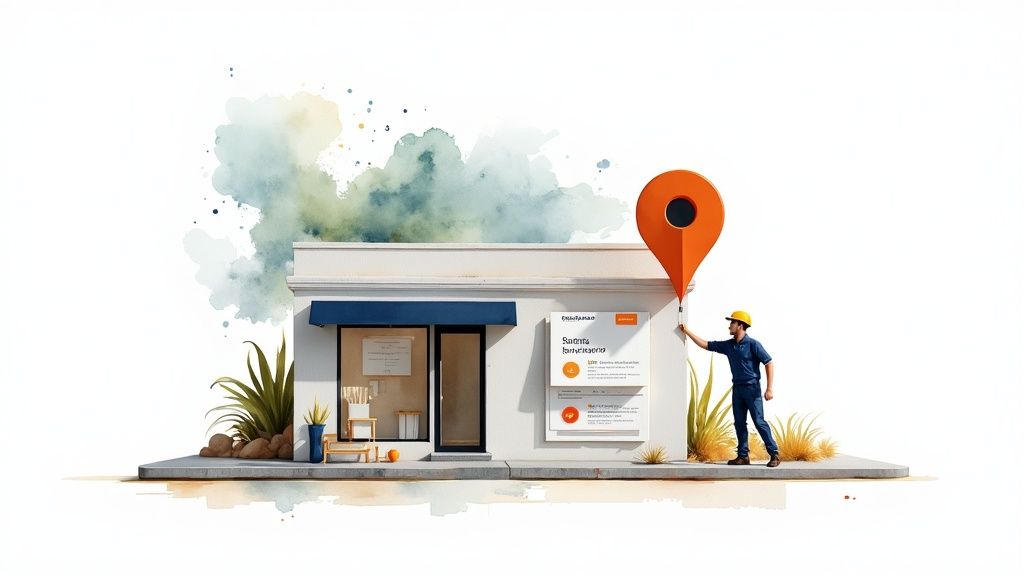
Think of your service-area pages as individual rooms in a showroom. Each one should guide a visitor straight to the service they need in their own neighborhood.
For HVAC professionals, these pages aren’t just filler—they’re magnets for local searchers. Let’s walk through how to nail your URLs, headers, on-page text, and schema so search engines and homeowners know exactly what you offer and where.
Start by matching your URL structure to the service and location.
Use /ac-repair-chicago instead of something generic like /service1. That simple tweak gives both users and Google a clear signal. Then make sure your H1 echoes the URL—consistency builds trust and relevance.
Local Content Crafting
Local details are the small touches that add up. Slip in neighborhood landmarks, ZIP codes, and common area nicknames to speak your audience’s language.
For example:
“Residents of Lincoln Park rely on us for same-day service.”
These specifics show Google you belong in that zip code—and they reassure homeowners you know their street.
- References to nearby streets or subdivisions
- Local stats such as 73% of homeowners preferring text alerts
- Testimonials from customers in the exact service area
After your content is in place, weave in internal links. Point each service-area page back to your main HVAC overview and to other neighborhood pages. This keeps readers—and crawlers—moving smoothly around your site while spreading link value evenly.
Schema Implementation
If content is your site’s air conditioning, schema is the thermostat that tells Google what exactly you do and where. Implement both LocalBusiness and Service schema with code like this:
{
“@context”: “https://schema.org“,
“@type”: “HVACBusiness”,
“name”: “CoolAir HVAC”,
“address”: {
“@type”: “PostalAddress”,
“streetAddress”: “123 Main St”,
“addressLocality”: “Chicago”,
“addressRegion”: “IL”,
“postalCode”: “60601”,
“addressCountry”: “US”
},
“serviceArea”: {
“@type”: “Place”,
“address”: {
“@type”: “PostalAddress”,
“addressLocality”: “Lincoln Park”
}
},
“url”: “https://example.com/ac-repair-chicago“
}
“Structured data can boost click-through rates by up to 20% in local searches.”
Local Versus Broad Keyword Use Cases
Not every keyword serves the same purpose. Here’s a quick look at when to go local and when a broader term makes sense:
| Keyword Type | Purpose | Placement |
|---|---|---|
| Local (e.g., “AC repair Lincoln Park”) | Capture neighborhood intent | URL, H1, meta description |
| Broad (e.g., “AC repair Chicago”) | Attract a citywide audience | Main navigation, overview page |
Use local keywords on your targeted service-area pages. Reserve broader terms for sitewide elements like your menu or top-level service overview.
Tool Recommendations
A few handy plugins and platforms can automate much of this work:
- WP SEO Structured Data Schema – Automatically generates LocalBusiness JSON-LD
- Yoast SEO Local – Builds geo-tagged meta templates for each service area
Next Steps And Audits
Keep your service-area pages fresh with quarterly checkups. Review for outdated ZIP codes, expired specials, or missing schema.
Use tools like Screaming Frog and Ahrefs to crawl your pages and flag any issues—broken tags, duplicate meta descriptions, or missing structured data.
By fine-tuning URLs, crafting hyper-local content, linking strategically, and applying schema, each service-area page becomes a high-converting showroom. Next up: mastering reviews and citations to boost your reputation and visibility. Implement these steps today and watch your local rankings climb.
Managing Reviews And Citations For Reputation And Visibility
Think of online reviews and citations as the digital equivalent of a neighbor’s recommendation. When your satisfied customers sing your praises online, it builds immediate trust with new homeowners—and sends a clear signal to Google that your HVAC company knows its stuff.
But there’s a rhythm to it. If you pile up reviews all at once, Google might raise an eyebrow. Too few, and you lose momentum. The trick is a steady, realistic flow of feedback that feels genuine to both search engines and prospects.
Why Reviews Matter
A handful of glowing reviews can reshape a homeowner’s decision in seconds. Studies show businesses with average ratings above 4.0 stars consistently outshine their lower-rated competitors. In fact, boosting your rating from 3.8 to 4.4 can lift click-through rates by 20–40% and deliver a similar jump in leads for HVAC contractors. Learn more about rating impact
Profiles with a rich history of feedback also tend to stay in the Google Map Pack longer. In a crowded market, that translates to a reliable stream of calls and estimate requests.
“Sustained review activity and consistent citations can extend your Map Pack presence and fuel continuous lead growth.”
Key Platforms To Target
• Google Business Profile – Your primary showcase with direct call buttons and maps.
• Facebook and Nextdoor – Capture local chatter and community trust.
• Industry Sites – Listings on HVAC.com and HomeAdvisor reinforce your trade credentials.
• Local Chambers – A nod from your city’s chamber of commerce adds geographical weight.
How To Collect Reviews
- Timing Is Everything
Ask right after a smooth service call when customer happiness peaks. - Personalize Your Ask
Send a friendly SMS or email link instead of a generic survey form. - Automate Gentle Reminders
Tools like Podium or NiceJob can nudge customers at the perfect moment. - Show Appreciation
Thank reviewers by name and comment on what you did for them to encourage more feedback.
Citation Audit And Cleanup
Citations are simply mentions of your business name, address, and phone number (NAP) around the web. When they’re inconsistent or duplicated, Google can’t tell which info is correct. A thorough audit involves:
• Finding every existing listing—major directories and niche sites alike
• Standardizing your NAP: spell out “Street” vs. “St.”, fix typos, align formatting
• Merging or removing duplicate entries to eliminate confusion
• Verifying updates across each platform to lock in consistency
Crafting Response Templates
Replying to reviews quickly shows prospects you genuinely care. Here’s a quick template roadmap:
• Positive Feedback: “Thanks, [Name]! We’re thrilled you loved the [Service].”
• Neutral Feedback: “We appreciate your thoughts, [Name]. Let’s talk details so we can improve.”
• Negative Feedback: “I’m sorry we fell short, [Name]. Please call us at [Phone] so we can make this right.”
Slot these into your review-management system to keep responses timely and on-brand.
Measuring Success
Keeping an eye on the right numbers lets you spot issues early. Track:
• Monthly Review Count – Are you gathering feedback at a steady clip?
• Average Star Rating – Is your quality improving over time?
• Citation Consistency Score (e.g., via Moz Local)
• Map Pack Position (using BrightLocal or Whitespark)
Regular reports uncover opportunities—and guide you on where to double down next.
Now’s the time to audit your citations and put a streamlined review process in place. Because in local SEO, consistency isn’t just a goal—it’s the engine that keeps your HVAC business top of mind.
Building Local Links And Optimizing Technical And Mobile Experience
Think of earning local backlinks as turning friendly neighbors into digital advocates. When suppliers, trade partners, or community groups link to your website, it’s like a trusted friend recommending you door-to-door. Not only does that endorsement strengthen your local seo for hvac contractors presence, but it also signals trust to Google.
Local Link Building Strategies
- Sponsor a neighborhood charity event or youth sports team to secure high-credibility .org or .gov backlinks.
- Join HVAC supplier directories and regional trade associations for context-rich referrals.
- Partner on community content—like a winter energy-savings guide—and swap mentions with collaborators.
- Host a hands-on workshop with a local hardware store to earn press coverage and blog links.
Personalize every outreach message by referencing past interactions or shared goals. That human touch lays the groundwork for ongoing link opportunities and steady referral traffic.
“Local links can account for up to 25% of the ranking signals in a service-area map pack.”
Technical SEO Best Practices
Fine-tuning your site’s technical side is like servicing a furnace before peak season. You want every page in top shape to avoid crawl errors and help search engines index your content smoothly. This kind of diligence powers your local seo for hvac contractors strategy from the ground up.
Key technical tasks include:
- Measure page speed with Core Web Vitals tools and aim for an LCP under 2.5 seconds.
- Build a responsive layout that adapts flawlessly to smartphones and tablets.
- Review your robots.txt and XML sitemap to eliminate broken links and ensure crawlability.
- Add LocalBusiness and Service schema markup so search engines clearly understand your offerings.
Regular technical audits catch small problems before they become big headaches. Automated alerts keep you ahead of any critical errors.
Mobile Experience Optimization
A seamless mobile experience is like a well-labeled control panel—intuitive and reliable. With 70% of HVAC searches happening on phones, homeowners expect quick-tap CTAs and friction-free navigation to call or request an estimate in seconds.
Bulletproof mobile tactics:
- Feature large, touch-friendly buttons for click-to-call or emergency service requests.
- Convert images to WebP and enable lazy loading to shrink mobile bandwidth.
- Minimize pop-ups and intrusive interstitials that frustrate users.
- Ensure menus collapse cleanly and load instantly on every screen size.
| Metric | Before Optimization | After Optimization |
|---|---|---|
| Average Mobile Load Time | 4.8 seconds | 1.9 seconds |
| Bounce Rate (Mobile) | 62% | 35% |
Tools And Audit Checklist
Maintaining peak performance is like scheduling quarterly HVAC tune-ups for your website. Use these tools to keep your site in top shape:
- Screaming Frog to uncover broken links and duplicate content.
- Google PageSpeed Insights and GTmetrix for speed diagnostics.
- Schema.org Validator or Rich Results Test to confirm structured data.
- Google Search Console for mobile-usability and crawl reports.
“A quarterly technical audit can prevent up to 40% of performance-related ranking drops.”
Measuring Link And Performance Impact
Link-building and technical fixes pay off only if you track their impact on rankings and conversions. Monitor referring domains, shifts in page authority, and crawl-error trends in your SEO dashboard. Combine those insights with mobile engagement metrics to see which improvements drive the biggest gains.
- Referring Domains Growth: target a 10% quarterly lift
- Mobile Session Duration: measure improved user engagement
- Error Rate Reduction: strive for zero critical crawl errors after each audit
Tie each enhancement back to real boosts in visibility and lead generation. Start today.
Optimizing Conversion With CTAs And Estimate Tools
Driving traffic is only half the battle in local SEO for HVAC contractors. Think of your website as a showroom floor: every button or widget is a display item, inviting visitors to take action.
By scattering clear call-to-action buttons, click-to-call links, and interactive estimate widgets across your site, you guide prospects toward scheduling service. In fact, a simple layout tweak on one landing page boosted form submissions by more than 30%, showing just how much impact small changes can make.
Below, you’ll find layout best practices, color-psychology insights, microcopy tips, and a testing framework. You’ll walk away with a checklist to optimize every conversion point on your site.
- Use CTAs with contrasting colors to stand out on any background
- Fix click-to-call links at the top of mobile screens for instant dialing
- Embed estimate tools near service descriptions to reduce friction
Design Placement Best Practices
Effective placement mimics a natural traffic flow in a showroom. Position your primary CTAs above the fold and secondary links in supporting spots so they guide the eye without overwhelming it.
- Place buttons within thumb-reach on mobile (bottom center)
- Incorporate directional cues like arrows or product images pointing to CTAs
- Limit each section to one clear action to avoid decision overload
Microcopy And Color Psychology
Microcopy—the few words surrounding your CTAs—works like a friendly salesperson offering guidance. The right phrasing removes hesitation and nudges visitors to click.
Use power words such as “Schedule” or “Get Instant Quote” to set clear expectations. Pair them with prompts like “Need help now?” or “Free estimate in seconds” for that extra push.
- Begin buttons with action verbs to signal momentum
- Add urgency words like “Now” or “Today” to spark prompt responses
- Keep labels under three words for maximum clarity
Testing And Measuring Conversions
You won’t know what sticks until you test. Run A/B experiments on button colors, copy, and placement to uncover winning combos. Track these key metrics:
- Click-through rate on primary CTAs
- Form submission rate per widget
- Phone call conversions from click-to-call links
“Small microcopy tweaks can improve conversion rates by up to 15%.”
Test one element at a time and document your findings to keep your approach data-driven and focused on growth.
Learn more about integrating instant quote widgets in our guide on The Power of Instant Quote Tools for HVAC Websites: The Power of Instant Quote Tools for HVAC Websites
- Schedule weekly reviews of conversion metrics to spot emerging trends
- Update copy quarterly to align with seasonal search intent
- Rotate CTA designs every three months to avoid creative fatigue
By blending customer psychology with technical precision, you’ll turn casual browsers into booked appointments—and build a predictable lead pipeline. Start experimenting today for immediate impact.
Frequently Asked Questions

Here’s a quick run-down of the questions HVAC contractors ask most often about local SEO. Each answer points to steps you can take right now.
How Can I Improve My Google Business Profile Ranking Quickly?
You’ll see movement by dialing in two areas: review velocity and category accuracy. Small, regular updates signal activity and relevance.
- Optimize your primary category and service areas so Google knows exactly what you offer
- Aim for 10 new reviews per month to keep momentum high
- Add fresh photos and weekly posts with special offers
How Many Reviews Should I Aim For Each Month?
Target 10–15 reviews every month. That sweet spot builds trust without triggering spam filters and keeps your profile looking active.
Should I Tackle Local SEO On My Own Or Hire An Agency?
If you go it alone, expect 3–6 months before you see real traction. Bringing in an experienced team often cuts that timeline to about 12 weeks with hands-on optimizations and regular audits.
“Consistent, quality reviews and precise GBP details can drive up to 50% of map pack ranking signals.”
Measuring Local SEO ROI
How Do I Track ROI On My Local SEO Campaigns?
Start with call tracking and form analytics to link every lead back to its source. Tools like CallRail and Google Analytics 4 reveal which keywords and pages are driving real inquiries.
Monitor these core metrics:
- Cost per lead from organic search
- Map pack position changes over time
- Form completion and click-to-call rates
Tie each metric to revenue by assigning an average install value. This way, your work on everything from schema markup to local link building shows up on the balance sheet.
Ready to boost your HVAC lead flow? Discover how HVAC Growth Machine delivers a high-converting website, automated SEO system, and detailed call tracking in just 7–10 business days.





Founder of HVAC Growth Machine